Avatar

Industrial Vibrator Installation & Troubleshooting FAQs 

By CVC Team

Vibratory tables are used to settle, compact, densify and de-air materials and can also be incorporated into production, packaging, weighing and testing processes. 

Cleveland Vibrator offers flat-deck, low-profile, grid-top, weigh, belt conveyor and foundry shakeout table configurations, with custom designs available for a wide range of container sizes, materials and load requirements. 

Read to Learn More: Vibratory Tables 

What does a vibratory table do? 

A vibratory table transfers controlled vibration into a container, mold, product or bulk material. Depending on the process, vibration can settle loose product, remove trapped air, increase bulk density, consolidate material in a mold or perform testing. 

Common applications include packaging, bulk-material compaction, concrete and refractory consolidation, foundry processes and quality testing. 

Read to Learn MoreVibratory Tables 

What materials can be compacted on a vibratory table? 

A broad range of materials can respond to vibration, including foundry sand, powdered materials, ceramic mixes, concrete, refractories and packaged products. 

The important question is not simply whether a material can be vibrated, but what combination of frequency, force and stroke produces the desired result. 

Read to Learn MoreStroke, Frequency and Force: Keys to Vibratory Compaction 

How do I choose the right vibratory table? 

Start with the process. 

Consider the dimensions and weight of the item being vibrated, material characteristics, desired amount of compaction, available floor space, loading/unloading method, conveyor integration, weighing requirements, controls and required vibration characteristics. 

Those requirements help determine whether the best solution is a flat-deck, grid-top, belt, weigh or other specialized table. 

Read to Learn MoreVibratory Tables 

What is a flat-deck vibratory table? 

A flat-deck table provides a solid vibrating surface on which a container, mold or product is placed. 

It is a versatile configuration for production, packaging, testing and material compaction and is often appropriate when the load can be placed directly onto and removed from the table deck. 

Read to Learn MoreVibratory Tables 

What is a grid-top vibratory table? 

A grid-top table is designed to integrate with roller conveyor systems. 

At the vibration station, the grid rises through or above the rollers, lifts the container off the conveyor, vibrates it and then lowers it back onto the rollers so it can continue through the production line. 

Read to Learn MoreGrid Top Vibratory Table 

What is a vibratory weigh table? 

A vibratory weigh table combines settling or compaction with weighing. 

Grid-top weigh tables can incorporate digital scale instrumentation and set points to coordinate filling, weighing and vibration, allowing the station to become part of an automated or semi-automated packaging line. 

Read to Learn MoreGrid Top Vibratory Weigh Table 

What is a vibratory belt table? 

A vibratory belt table combines vibration with conveyor movement so material can be settled inside a container while that container moves toward the next packaging operation. 

This can be useful where compaction needs to fit into a continuous production or packaging process rather than operating as a separate manual station. 

Read to Learn MoreVibratory Tables 

How much can vibration compact my material? 

The percentage of compaction varies significantly by material. Particle size, particle shape, bulk density, moisture, initial aeration and vibration parameters all affect the result. 

Instead of relying on a universal compaction percentage, testing a representative sample can determine how the material responds and estimate achievable compaction. 

Read to Learn MoreStroke, Frequency and Force: Keys to Vibratory Compaction 

How long should material be vibrated? 

There is no universal time. Many materials achieve most useful compaction relatively quickly, and continuing to add vibration after the material has settled may provide little benefit. 

Testing is the best way to determine the point at which additional vibration stops providing meaningful compaction. 

Read to Learn MoreVibratory Table Compaction Conundrum 

Can you over-vibrate a material? 

Yes. More vibration does not necessarily create more compaction. 

With an unsuitable combination of force and frequency, some materials can begin to aerate or fluidize instead of densifying. The objective is to identify the vibration conditions that reach maximum useful compaction efficiently. 

Read to Learn MoreStroke, Frequency and Force: Keys to Vibratory Compaction 

What frequency is best for vibratory compaction? 

It depends on the material. Material characteristics determine the appropriate combination of frequency, force and stroke. 

Heavier or fine materials may respond differently from light or coarse materials. Actual testing is valuable for difficult or high-value applications. 

Read to Learn MoreStroke, Frequency and Force: Keys to Vibratory Compaction 

Can a vibratory table help fit more material into a container? 

Yes. Settling an aerated bulk material can reduce its volume, allowing more product to fit into a drum, box, bulk bag or other container. 

The economic benefit can include improved use of container capacity and reduced packaging or shipping requirements, depending on the material and process. 

Read to Learn MoreBulk Bag / Box Filler Densification 

Can a vibratory table be used for concrete? 

Yes. Vibratory tables can help remove air and voids and consolidate poured concrete in molds. 

The appropriate vibration characteristics depend on the mix, mold, load and desired finished-product characteristics. 

Read to Learn MoreVibratory Tables 

Can a vibratory table be used for refractory materials? 

Yes. Refractory consolidation is a common vibratory-table application. 

Vibration can assist with de-airing and settling castable refractory material into molds. Because mixes differ significantly, material testing can be valuable when specifying the vibration system. 

Read to Learn MoreVibratory Table Applications 

How much weight can a vibratory table handle? 

Capacity depends on the table design. Cleveland Vibrator has experience designing compaction tables for both small loads and very heavy industrial loads. 

Table construction, deck dimensions, isolation system and vibratory drive are selected around the actual load and process. 

Read to Learn MoreVibratory Tables 

Can a vibratory table be built to custom dimensions? 

Yes. Table designs can be customized around the customer’s product, container, available space and manufacturing process rather than forcing every application into one standard deck size. 

Read to Learn MoreVibratory Compaction Table Design Options 


Share this blog post:
FacebooktwitterlinkedinmailFacebooktwitterlinkedinmail
Avatar

Vibratory Table FAQs | Compaction, Settling & Sizing 

By CVC Team

Vibratory tables are used to settle, compact, densify and de-air materials and can also be incorporated into production, packaging, weighing and testing processes. 

Cleveland Vibrator offers flat-deck, low-profile, grid-top, weigh, belt conveyor and foundry shakeout table configurations, with custom designs available for a wide range of container sizes, materials and load requirements. 

Read to Learn More: Vibratory Tables 

What does a vibratory table do? 

A vibratory table transfers controlled vibration into a container, mold, product or bulk material. Depending on the process, vibration can settle loose product, remove trapped air, increase bulk density, consolidate material in a mold or perform testing. 

Common applications include packaging, bulk-material compaction, concrete and refractory consolidation, foundry processes and quality testing. 

Read to Learn MoreVibratory Tables 

What materials can be compacted on a vibratory table? 

A broad range of materials can respond to vibration, including foundry sand, powdered materials, ceramic mixes, concrete, refractories and packaged products. 

The important question is not simply whether a material can be vibrated, but what combination of frequency, force and stroke produces the desired result. 

Read to Learn MoreStroke, Frequency and Force: Keys to Vibratory Compaction 

How do I choose the right vibratory table? 

Start with the process. 

Consider the dimensions and weight of the item being vibrated, material characteristics, desired amount of compaction, available floor space, loading/unloading method, conveyor integration, weighing requirements, controls and required vibration characteristics. 

Those requirements help determine whether the best solution is a flat-deck, grid-top, belt, weigh or other specialized table. 

Read to Learn MoreVibratory Tables 

What is a flat-deck vibratory table? 

A flat-deck table provides a solid vibrating surface on which a container, mold or product is placed. 

It is a versatile configuration for production, packaging, testing and material compaction and is often appropriate when the load can be placed directly onto and removed from the table deck. 

Read to Learn MoreVibratory Tables 

What is a grid-top vibratory table? 

A grid-top table is designed to integrate with roller conveyor systems. 

At the vibration station, the grid rises through or above the rollers, lifts the container off the conveyor, vibrates it and then lowers it back onto the rollers so it can continue through the production line. 

Read to Learn MoreGrid Top Vibratory Table 

What is a vibratory weigh table? 

A vibratory weigh table combines settling or compaction with weighing. 

Grid-top weigh tables can incorporate digital scale instrumentation and set points to coordinate filling, weighing and vibration, allowing the station to become part of an automated or semi-automated packaging line. 

Read to Learn MoreGrid Top Vibratory Weigh Table 

What is a vibratory belt table? 

A vibratory belt table combines vibration with conveyor movement so material can be settled inside a container while that container moves toward the next packaging operation. 

This can be useful where compaction needs to fit into a continuous production or packaging process rather than operating as a separate manual station. 

Read to Learn MoreVibratory Tables 

How much can vibration compact my material? 

The percentage of compaction varies significantly by material. Particle size, particle shape, bulk density, moisture, initial aeration and vibration parameters all affect the result. 

Instead of relying on a universal compaction percentage, testing a representative sample can determine how the material responds and estimate achievable compaction. 

Read to Learn MoreStroke, Frequency and Force: Keys to Vibratory Compaction 

How long should material be vibrated? 

There is no universal time. Many materials achieve most useful compaction relatively quickly, and continuing to add vibration after the material has settled may provide little benefit. 

Testing is the best way to determine the point at which additional vibration stops providing meaningful compaction. 

Read to Learn MoreVibratory Table Compaction Conundrum 

Can you over-vibrate a material? 

Yes. More vibration does not necessarily create more compaction. 

With an unsuitable combination of force and frequency, some materials can begin to aerate or fluidize instead of densifying. The objective is to identify the vibration conditions that reach maximum useful compaction efficiently. 

Read to Learn MoreStroke, Frequency and Force: Keys to Vibratory Compaction 

What frequency is best for vibratory compaction? 

It depends on the material. Material characteristics determine the appropriate combination of frequency, force and stroke. 

Heavier or fine materials may respond differently from light or coarse materials. Actual testing is valuable for difficult or high-value applications. 

Read to Learn MoreStroke, Frequency and Force: Keys to Vibratory Compaction 

Can a vibratory table help fit more material into a container? 

Yes. Settling an aerated bulk material can reduce its volume, allowing more product to fit into a drum, box, bulk bag or other container. 

The economic benefit can include improved use of container capacity and reduced packaging or shipping requirements, depending on the material and process. 

Read to Learn MoreBulk Bag / Box Filler Densification 

Can a vibratory table be used for concrete? 

Yes. Vibratory tables can help remove air and voids and consolidate poured concrete in molds. 

The appropriate vibration characteristics depend on the mix, mold, load and desired finished-product characteristics. 

Read to Learn MoreVibratory Tables 

Can a vibratory table be used for refractory materials? 

Yes. Refractory consolidation is a common vibratory-table application. 

Vibration can assist with de-airing and settling castable refractory material into molds. Because mixes differ significantly, material testing can be valuable when specifying the vibration system. 

Read to Learn MoreVibratory Table Applications 

How much weight can a vibratory table handle? 

Capacity depends on the table design. Cleveland Vibrator has experience designing compaction tables for both small loads and very heavy industrial loads. 

Table construction, deck dimensions, isolation system and vibratory drive are selected around the actual load and process. 

Read to Learn MoreVibratory Tables 

Can a vibratory table be built to custom dimensions? 

Yes. Table designs can be customized around the customer’s product, container, available space and manufacturing process rather than forcing every application into one standard deck size. 

Read to Learn MoreVibratory Compaction Table Design Options 


Share this blog post:
FacebooktwitterlinkedinmailFacebooktwitterlinkedinmail
Avatar

Vibratory Feeder FAQs | Selection, Sizing & Feed Rates 

By CVC Team

Vibratory feeders provide controlled movement of bulk materials from one process to another. They can be used to feed mixers, crushers, screeners and furnaces; meter ingredients; fill containers; or spread material across another product or process. 

Cleveland Vibrator offers air-powered, electromechanical and volumetric feeder configurations with adjustable material flow and a wide range of tray, discharge, isolation and control options. 

Read to Learn More: Vibratory Feeders 

How does a vibratory feeder work? 

A vibratory feeder moves material through a series of very short, rapid movements along the feeder tray. Although it appears to the eye as a continuous stream, the material is actually making repeated small hops forward. 

The vibratory drive and tray are designed to create controlled movement in the desired direction. 

Read to Learn More: Vibratory Feeders 

What is a vibratory feeder used for? 

Vibratory feeders can move bulk material from one process to another, meter ingredients into a process, feed furnaces or equipment, fill containers and spread or sprinkle material. 

Applications can include feeding ingredients to mixing tanks, adding foundry binders, feeding metal components to heat-treating furnaces and delivering scrap or glass cullet to furnaces. 

Read to Learn More: Vibratory Feeders 

How do you size a vibratory feeder? 

Feeder sizing begins with the material and required capacity. Important factors include required feed rate, bulk density, particle characteristics, desired bed depth, tray width and length, tray shape, discharge arrangement and downstream process requirements. 

These variables should be evaluated together rather than selecting a feeder solely from a nominal tons-per-hour figure. 

Read to Learn More: How to Design and Size a Vibratory Feeder Conveyor 

What determines the capacity of a vibratory feeder? 

Capacity depends on several variables, including tray width, tray configuration, material bulk density, material depth and the rate at which the material travels. 

A flat tray, V-shaped tray and tubular feeder of similar overall dimensions will not necessarily have the same capacity. 

Read to Learn More: Vibratory Feeders 

How do I control the feed rate of a vibratory feeder? 

Depending on the feeder design, feed rate can be adjusted by changing vibration intensity, operating frequency and material depth at the feeder inlet. 

A variable-frequency drive can provide additional control on electromechanical feeders, while air-powered and electromagnetic designs have their own methods of varying vibration. Hopper gate position can also influence the amount of material placed on the feeder tray. 

Read to Learn More: 3 Variables that Influence Material Flow from Vibratory Hopper Feeders 

Why is my vibratory feeder feeding inconsistently? 

First look at the material itself. Significant changes in particle size, density, moisture or flowability can make consistent metering difficult even when the feeder is operating correctly. 

Other variables include hopper gate opening, bed depth, vibration force, frequency and downstream process speed. Work through these variables systematically when precise material delivery is required. 

Read to Learn More: 3 Variables that Influence Material Flow from Vibratory Hopper Feeders 

Can a vibratory feeder provide precise metering? 

It can provide controlled and repeatable volumetric flow when the material and process conditions are suitable. 

For precise applications, consistency in particle size, density and flow characteristics becomes increasingly important. Variable controls allow the feed rate to be tuned to the application. 

Read to Learn More: 3 Variables that Influence Material Flow from Vibratory Hopper Feeders 

Can a vibratory feeder handle powder? 

Yes, vibratory feeders can be designed for many powdered and granular materials, but the material’s flow characteristics must be considered. 

Very fine, cohesive, dusty or aerated powders may require different hopper geometry, tray design, covers, liners or vibration parameters than a coarse, free-flowing granular material. 

Read to Learn More: Vibratory Feeders 

What feeder tray shape should I use? 

The best tray depends on the material and process. 

Cleveland Vibrator offers flat, V-shaped and tubular configurations, along with different discharge styles. A flat tray can maximize open conveying area, a V-shaped design can help contain material and a tubular design can provide greater containment where dust control or enclosed conveying is important. Tray shape also affects capacity. 

Read to Learn More: Vibratory Feeders 

Can a vibratory feeder be enclosed? 

Yes. Dust covers and tubular tray configurations can be incorporated into feeder designs. 

Enclosure may be beneficial where the process involves dusty material, product containment or environmental control. 

Read to Learn More: Vibratory Feeders 

Can a vibratory feeder spread material evenly? 

Yes. In addition to transporting material from Point A to Point B, a properly configured vibratory feeder can spread or sprinkle bulk material across another product or conveyor. 

Feeder force, frequency and operating speed can be adjusted to create a controlled layer of material across a process below the feeder. 

Read to Learn More: How to Design and Size a Vibratory Feeder Conveyor 

Can a vibratory feeder feed a mixer, screener or furnace? 

Yes. These are common applications. Vibratory feeders can serve mixers, shredders, crushers, screeners, furnaces, production processes and final containers. 

Read to Learn More: Vibratory Feeders 

What is the difference between an air-powered and electric vibratory feeder? 

Air-powered feeders use pneumatic vibration and can provide a simple solution where compressed air is readily available. Electric electromechanical feeders use electric vibratory motors and can incorporate controls for speed and vibration intensity. 

Air-powered feeders can also be attractive in some hazardous-area applications, subject to the requirements of the installation. 

Read to Learn More:  Air-Powered Vibratory Feeders 

Can a vibratory feeder be integrated with a hopper? 

Yes. Feeders are frequently supplied beneath storage hoppers. 

The hopper can be attached to the feeder system or remain a separate, non-vibrating structure depending on the process. Hopper geometry and gate opening should provide material to the feeder without placing excessive head load on the tray. 

Read to Learn More: Attached vs. Unattached Volumetric Hopper Designs 

Can a vibratory feeder be integrated with weighing or batch controls? 

Yes. Special control options can include batch weighing, remote operation, two-speed operation and multiple-feeder systems. 

Read to Learn More: Vibratory Feeders 


Share this blog post:
FacebooktwitterlinkedinmailFacebooktwitterlinkedinmail
Avatar

Bin & Hopper Vibrator FAQs | Material Flow Solutions

By CVC Team

Material hang-ups in bins and hoppers can slow production, create inconsistent discharge and lead operators to strike the vessel manually. Industrial vibrators provide a controlled way to introduce energy into the vessel wall to promote bulk material flow and cleanout. 

Cleveland Vibrator applies pneumatic and electric vibration to applications involving bridging, ratholing, sticking material and incomplete hopper discharge across industries including aggregate, feed and grain, cement, foundry, dust collection and wood products. 

Read to Learn More: Bin & Hopper Application 

What causes material to bridge in a hopper? 

Bridging, sometimes called arching, occurs when material forms a stable arch across the hopper outlet. Friction between particles and the hopper wall can support the material above the outlet even as material below it is discharged. 

Industrial vibration helps reduce the conditions that allow this arch to remain stable, encouraging material to move toward the discharge. 

Read to Learn MoreBin & Hopper Application 

What is ratholing in a bin or hopper? 

Ratholing occurs when material flows through a narrow channel above the outlet while material surrounding that channel remains stuck to the vessel walls. 

The result is incomplete discharge and reduced usable capacity. External vibration can help mobilize the material remaining along the hopper walls and promote more complete flow. 

Read to Learn MoreBin & Hopper Application 

What is the difference between bridging and ratholing? 

Bridging typically blocks the outlet with an arch of material. 

Ratholing allows some material to discharge through a central channel while a substantial portion remains along the vessel walls. Both can restrict production, but the location and behavior of the material differ, which can affect vibrator selection and placement. 

Read to Learn MoreBin & Hopper Application 

How does a hopper vibrator improve material flow? 

A properly sized and installed vibrator transfers energy through the hopper wall and into the bulk material. This helps overcome friction and material cohesion that contribute to bridging, ratholing and sticking. 

The objective is not simply to shake the hopper harder. Effective vibration applies the right force and frequency to the appropriate portion of the vessel. 

Read to Learn MoreBin & Hopper Application 

Where should a vibrator be mounted on a hopper? 

Placement depends on the vessel and the location of the flow problem. For a typical sloped-wall hopper installation, a common starting point is partway up the sloped wall from the discharge, positioned so the energy reaches the problem area. 

When additional vibrators are required, their locations can be staggered on opposing walls so the vibration energy is distributed effectively rather than concentrated in one area. 

Read to Learn MoreProper Installation of Industrial Vibrators 

How many vibrators does my hopper need? 

Vessel size, geometry and application determine the quantity. A correctly sized vibrator has a limited zone of influence, so a large hopper may need several vibrators positioned strategically rather than one large vibrator. 

Read to Learn MoreBin & Hopper Application 

Should two hopper vibrators be mounted directly across from each other? 

Not necessarily. When multiple vibrators are used, consider opposite-side placement and staggered mounting heights so vibration energy is distributed through the vessel rather than simply concentrated at one elevation. 

Read to Learn MoreTwo Vibrators Are Always Better Than One? 

Can a vibrator damage my hopper? 

A correctly sized and properly installed vibrator should be selected with the vessel construction in mind. Problems attributed to vibration are often associated with improper sizing, mounting, reinforcement or installation rather than the mere use of vibration. 

The mounting system must transfer the vibration into the vessel correctly without creating an excessive localized stress concentration. 

Read to Learn MoreProper Installation of Industrial Vibrators 

Why shouldn’t employees hit a hopper with a hammer? 

Manual hammering may temporarily loosen material, but repeated impacts can dent and damage the hopper wall while also creating an unnecessary manual task around process equipment. 

A properly engineered vibratory flow aid provides a repeatable way to address material hang-ups without relying on manual striking. 

Read to Learn MoreBin & Hopper Application 

What vibrator is best for sticky material in a hopper? 

Impacting piston vibration is commonly considered for sticky or cohesive bulk materials because the impact can help release material clinging to hopper walls. 

For a localized cleanout problem, a single-impact air knocker may also be appropriate. Dry bulk-flow applications may be better served by non-impacting vibration. 

Source / supporting content: Sizing and Selecting Air Piston Vibrators 

Can vibration help completely clean out a hopper? 

Yes. Final cleanout is one of the applications considered during vibrator selection. 

However, the force requirement and vibrator type used for removing residual material from an almost-empty hopper may differ from the requirements for keeping material flowing while the hopper is substantially full. 

Source / supporting content: Sizing an Industrial Vibrator on a Bulk Barge Hopper 

Can vibration make a material-flow problem worse? 

It can if the vibrator is incorrectly selected or operated. Certain materials can compact, aerate or otherwise respond unexpectedly to an unsuitable combination of force and frequency. 

Sizing should therefore account for the material itself—not merely the dimensions of the hopper. 

Read to Learn MoreStroke, Frequency and Force: Keys to Vibratory Compaction 

Can I use a hopper vibrator if I cannot permanently modify the vessel? 

Potentially. Portable or vacuum-mounted vibrator configurations can be useful where permanent installation is not desirable or practical. 

Read to Learn MoreVacuum-Mounted Vibrator 


Share this blog post:
FacebooktwitterlinkedinmailFacebooktwitterlinkedinmail
Avatar

Industrial Vibrator Selection & Sizing FAQs 

By CVC Team

Selecting an industrial vibrator involves more than finding a model with enough force. The right solution depends on what you are trying to accomplish, the material being handled, the size and construction of the vessel or equipment, the available power source and the way vibration needs to interact with the material. 

Cleveland Vibrator uses a selection process that considers the number of vibrators required, the force required and the most appropriate vibrator type. Vessel geometry, material characteristics, wall thickness, operating environment and the specific material-flow problem all play a role in the final selection. 

Read to Learn More: Industrial Vibrator Selection Guide 

How do I choose the right industrial vibrator? 

Start with the application rather than the vibrator. Determine what you need vibration to accomplish: promote bulk material flow, eliminate bridging or ratholing, clean material from vessel walls, compact material, feed product or address a localized material hang-up. 

Next, consider vessel geometry, material characteristics, required force and frequency, wall thickness, operating environment and available power. Those factors narrow the selection to the appropriate vibrator type and size. 

Read to Learn MoreIndustrial Vibrator Selection Guide 

What information is needed to size an industrial vibrator? 

For a bin, hopper, chute or pipe application, useful information includes: 

  • Vessel dimensions and shape 
  • Hopper or wall thickness 
  • Material being handled 
  • Material bulk density 
  • Whether the material is dry, sticky, cohesive or prone to packing 
  • The location and nature of the material-flow problem 
  • Whether the objective is bulk flow or final cleanout 
  • Available electrical power or compressed air 
  • Operating environment and hazardous-area requirements 
  • Current mounting arrangement, if one exists 

Read to Learn MoreIndustrial Vibrator Selection Guide 

How much vibratory force do I need? 

Required force depends on the application and the amount of material or structure that must be influenced. For bin and hopper flow applications, the sizing process considers vessel geometry and the portion of the material load relevant to the application. 

Force should not simply be maximized. Excessive force can waste energy, create unnecessary stress on the structure and produce poor process results. Correct sizing means applying the appropriate amount of energy for the job. 

Read to Learn More: Sizing and Selecting Air Piston Vibrators 

Can an industrial vibrator be too powerful? 

Yes. More force is not automatically better. 

An oversized vibrator can introduce more vibration than the structure or process requires. In compaction applications, excessive energy can even aerate or fluidize certain materials rather than compacting them efficiently. In bin and hopper applications, correct vibrator sizing and mounting are important for effective material flow and equipment life. 

Read to Learn MoreStroke, Frequency and Force: Keys to Vibratory Compaction 

How many vibrators do I need on a bin or hopper? 

The number of vibrators depends primarily on the size and geometry of the vessel and where vibration must be transferred. A properly sized vibrator has a finite area of influence, so larger vessels may require multiple smaller vibrators instead of one oversized unit. 

Multiple vibrators can distribute vibration more effectively across the problem area while avoiding excessive force concentrated at one mounting location. 

Read to Learn MoreIndustrial Vibrator Selection Guide 

What is the difference between vibration force and frequency? 

Force is the amount of vibratory energy being applied. Frequency is how often the vibration occurs, typically expressed as vibrations per minute, or VPM. 

The correct combination matters. Different materials respond differently to frequency, force and the resulting stroke or displacement. 

Read to Learn More: Stroke, Frequency and Force: Keys to Vibratory Compaction 

What is vibration amplitude or stroke? 

Stroke is the displacement or distance of the vibrating movement. It is influenced by the relationship between vibration frequency and force. 

Higher-frequency vibration typically produces a smaller stroke, while lower-frequency vibration can produce a larger displacement. The best combination depends on the material and what the vibration is intended to accomplish. 

Read to Learn MoreStroke, Frequency and Force: Keys to Vibratory Compaction 

Does higher vibration frequency mean better material flow? 

Not necessarily. The best frequency depends on the material and application. 

Fine, dense materials may react differently from lightweight, coarse or cohesive materials. Increasing frequency without understanding the material response may not improve flow and can sometimes create an undesirable result. 

Read to Learn MoreStroke, Frequency and Force: Keys to Vibratory Compaction 

Should I use a pneumatic or electric industrial vibrator? 

Both can be effective. The best choice depends on your facility and application. 

Pneumatic vibrators are available in several operating principles, including piston, turbine and ball designs, and are useful where compressed air is readily available or where a particular impact or linear vibration characteristic is desirable. Electric options include rotary electric, DC and electromagnetic vibrators and can be attractive where electrical power is more convenient than compressed air. 

Read to Learn MoreIndustrial Vibrators 

What type of vibrator is best for sticky material? 

For bin and hopper applications involving cohesive or sticky material, an impacting vibrator may be appropriate because the impact can help break material loose from the vessel wall. 

A single-impact air knocker may also be considered when the problem is concentrated in a particular area or when final cleanout is the objective. 

Read to Learn MoreSizing and Selecting Air Piston Vibrators 

What type of vibrator is best for dry, free-flowing material? 

Dry material may respond well to non-impacting vibration. Non-impacting piston designs are commonly considered for bulk flow of dry materials such as grain and dried aggregates. 

The final selection still depends on vessel geometry, required force, wall construction and available utilities. 

Read to Learn MoreSizing and Selecting Air Piston Vibrators 

Does hopper wall thickness affect vibrator sizing? 

Yes. Wall thickness affects how vibration is transferred into the structure and is one of the variables considered when sizing a bin or hopper vibrator. 

If the vessel wall is too light for the required vibrator force, reinforcement or a properly designed mounting arrangement may be necessary. If the wall is substantially heavier, more vibratory force may be required to effectively transmit vibration. 

Read to Learn MoreSizing an Industrial Vibrator on a Bulk Barge Hopper 

Can I use one large vibrator instead of several smaller vibrators? 

Sometimes, but it is not always the best approach. On larger vessels, several correctly sized vibrators can distribute energy to multiple areas more effectively than concentrating a large amount of force in one location. 

The goal is effective coverage of the problem area without unnecessarily concentrating force. 

Read to Learn MoreSizing an Industrial Vibrator on a Bulk Barge Hopper 


Share this blog post:

FacebooktwitterlinkedinmailFacebooktwitterlinkedinmail
Avatar

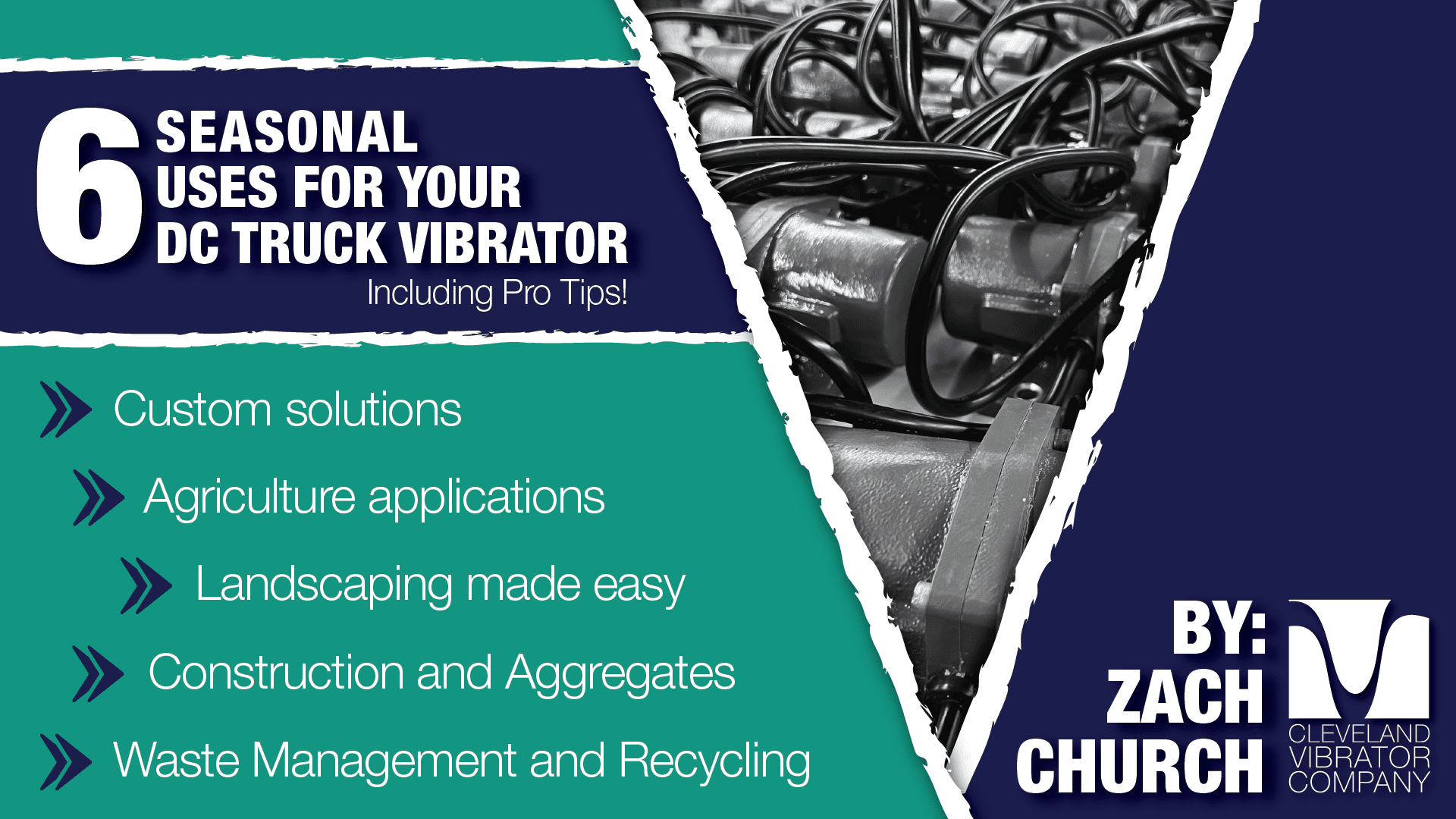
Six Proven and Effective Seasonal Uses For Your New DC Truck Vibrator

By Zach Church

When there is winter there is snow and ice, a sad fact of life. It’s up to the snow and ice management teams to ensure that roads and parking lots are safe for travel. For those in the snow/ice management business, DC vibrators are an essential tool that evenly distributes salt and de-icing materials.  

But as the snow melts and the weather warms up, many overlook the fact that these vibrators are far from being just snow season tools. You can use DC vibrators across numerous industries year-round, making them versatile pieces of equipment. 

Here’s how your DC vibrator can go beyond just the winter season: 

LANDSCAPING MADE EASY 

In the spring, when the landscaping season kicks into high gear, DC vibrators make the transition seamless. Whether you’re spreading mulch, gravel, or topsoil, a properly equipped truck ensures these materials flow smoothly and quickly from your hopper or dump trailer. This increases your efficiency, reducing the need for manual labor and rework. The same vibration that helps salt flow freely in the winter can also help your soil or mulch from clumping, making it easier to spread across large areas. 

PRO TIP: Just like in the winter, ensuring that your DC vibrator is appropriately installed and maintained is critical to preventing breakdowns during your busiest times. Regular checks of your mounting plate, bolts, and cables will keep your equipment running smoothly through any season. 

AGRICULTURE APPLICATIONS 

In the fast-paced world of agriculture, the versatility of our DC vibrators is a game changer for famers and agricultural professionals a like. Whether spreading fertilizer, seeds, or feed, having a reliable vibrator ensures consistent flow, preventing blockages and uneven distribution. This can be particularly beneficial during the planting season when time is of the essence and equipment downtime is especially costly. 

PRO TIP: It is crucial to adjust the vibratory force based on the type of material being spread and the hopper being used. Heavier material and larger hoppers might require more force, while lighter, finer materials or smaller hoppers only need gentle vibration to keep things moving. 

CONSTRUCTION AND AGGREGATES 

In the construction industry, time is money. DC vibrators can efficiently spread aggregates like sand, gravel, and crushed stone. This is particularly useful in road construction and paving, where even distribution of materials is critical to the quality of the final product. When pouring concrete, a constant vibratory force can shake out air pockets and significantly reduce manual intervention. DC vibrators prevent materials from sticking to the hopper, keeping the project on schedule and your deadlines met. 

PRO TIP:  Be mindful of the hopper’s load and the density of the material being used. Dense materials, like concrete, might require stronger and more consistent vibration than something more porous. Additionally, monitor the spread rate to ensure that the vibratory force doesn’t cause material segregation or uneven distribution. Consider the position of the vibrator on the hopper or shoot. This will aid in the proper distribution of the material being spread. 

WASTE MANAGEMENT AND RECYCLING 

Within the demanding field of waste management and recycling, DC vibrators offer significant advantages to streamline operations. Whether dealing with organic waste, scrap metal, or end of year record shredding, these vibrators can help ensure that materials move smoothly down the hopper and into the shredder. This not only improves the operation’s efficiency but also reduces the risk of jams and bridging that can occur, leading to costly downtime. 

PRO TIP: In harsh environments like waste management, it’s especially important to regularly inspect the vibrator and its components for signs of wear and tear. Keeping the vibrator well-ventilated and free from debris will extend its lifespan and ensure reliable operation. 

CUSTOM SOLUTIONS FOR UNIQUE APPLICATIONS 

At Cleveland Vibrator, we understand that every operation is different, so we offer a range of DC vibrators designed to meet any need. From small tailgate spreaders to large heavy-duty hoppers, we can help you find the perfect solution for your specific application. And if your needs exceed our standard products, we’re always here to discuss custom solutions tailored to your unique challenges. 

PRO TIP: Don’t hesitate to reach out to our team if you have a specialized application in mind. Our experts are always available to help you select the right equipment and provide installation and maintenance advice to keep your operations running smoothly. 

VIBRATORS FOR EVERY SEASON 

As you can see, DC vibrators are far more than just winter tools. Their versatility makes them valuable assets in a wide range of industries, from landscaping, agriculture, construction, waste management, and more. By choosing the right vibrator and maintaining it properly, you can ensure that your equipment performs at its best, no matter the season.  

So, as winter ends and snow melts, don’t store away your DC vibrator just yet. Think about how you can use it in your other operations to save time and improve efficiency year-round. At Cleveland Vibrator, we’re here to help you make the most of your equipment, season after season. 

If you have any questions or need additional assistance, don’t hesitate to contact us. Our team is always ready to help you find the perfect solution for your needs. 

Let’s work together to keep your operations running smoothly, no matter the season! 


Share this blog post:

FacebooktwitterlinkedinmailFacebooktwitterlinkedinmail
Avatar

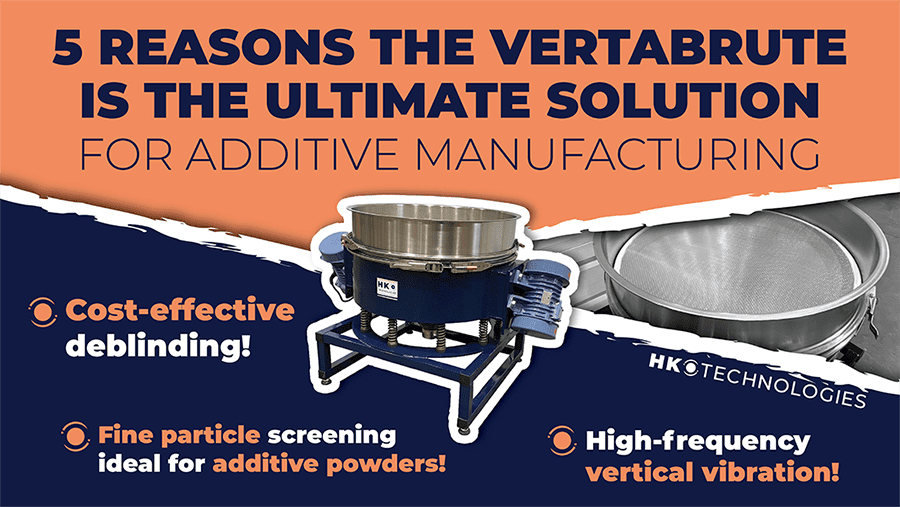
5 Reasons the VertaBrute is the Ultimate Solution for Additive Manufacturing

By Cleveland Vibrator Team

Spoiler alert: Spending money to purchase additional equipment for screen deblinding is a thing of the past. Enter the VertaBrute, HK Technologies’ all-purpose, high-energy fine mesh screener that is taking the additive manufacturing world by storm. 

Here are five reasons to give the VertaBrute a closer look: 

  1. Cost-Effective Deblinding: The VertaBrute provides ultrasonic sieving performance without having to purchase costly ultrasonic equipment
  1. High-Frequency Vertical Vibration: The VertaBrute delivers effective deblinding action directly through the screen, enhancing performance with high-amplitude, low-frequency vibrations. 
  1. Fine Particle Screening: The VertaBrute is now available in 17-inch and 36-inch screen diameters and is capable of screening down to 20 microns, which makes it ideal for additive powders.  
  1. Durable Construction: The VertaBrute comes standard with mild steel construction and a powder coat finish making it built to last in even the harshest production conditions. Additional upgrade options using 14-gauge stainless steel in all contact areas is perfect for contamination-free environments.  
  1. Quick Screen Changeovers: The VertaBrute is designed for rapid screen changes to minimize production downtime and maximize operational efficiency. 

Explore HK Technology’s all-purpose, high-energy VertaBrute here and reach out to HK’s #PowderSiftPros to learn even more ways to elevate your screening operations. 


Share this blog post:
FacebooktwitterlinkedinmailFacebooktwitterlinkedinmail
Avatar

How To Choose Quality And Effective DC Vibrators For Your Salt Spreader

By Zach Church

As winter approaches, taking time to ensure that salt spreader you have on your truck is optimized to its fullest potential is essential to making quick work of the snow and ice heading your way. Whether you’re a seasoned pro or perhaps a first-time user, choosing the correct DC truck vibrator can make a huge difference in the performance of your equipment. 

Here are five important things to keep in mind: 

  1. KNOW YOUR HOPPER SIZE 

Begin by checking the size of your spreader hopper. Cleveland Vibrator’s line of DC truck vibrators come in several sizes so it’s important to select the one that best fits your needs. The MG-80 and its 80 pounds of vibratory force is a perfect choice for smaller tailgate spreaders. However, if you have a larger, slide-in V-Box spreader, you would be wise to opt for a heavy-duty solution like the MG-200 which boasts 200 pounds of force. In some V-Box applications when even more vibratory force is needed, one option is to mount two vibrators – one on each side of the spreader. 

PRO TIP: Product stickers and powder coating don’t mix well with harsh winter conditions so keep a written copy of the make/model of your spreader as well as the make/model of your truck vibrator handy so you can access that information easily in case you need to reference it later. 

  1. INSTALLATION MATTERS 

Proper installation is key to ensuring that your vibrator continues to function optimally. It’s always a good idea to keep the following things in mind when purchasing and installing a truck vibrator:  

  1. Use a steel backing plate to mount your vibrator. Not only will it extend the life of your spreader, but your actual vibrator will also last much longer.  
  1. When uninstalling an older vibrator from your hopper, be sure to inspect the area around the bolt holes to make sure the plastic isn’t cracked.   
  1. Although you want to make sure your mounting bolts are tight, be careful not to overtighten (See No. 2 above). A snug fit will help prevent wear and tear on your hopper. 

Installation is a good time to check anything/everything that might be happening behind the scenes on your hopper. When left unchecked, those little things can turn into big problems down the road. For more helpful installation steps and tips, click here for our handy vibrator instruction manual.  

  1. MAINTENANCE TIPS FOR LONGEVITY 

Extend the life of your vibrator by following these maintenance best practices: 

  • Avoid carrying the vibrator by the cable. 
  • Leave slack in the cable during mounting. 
  • Be cautious when pressure washing the hopper, avoiding direct water pressure on the vibrator. 
  • Handle the spreader with care, considering the presence of the vibrator during unloading. 
  • Tighten bolts securely to ensure the vibrator can perform its job effectively. 
  • Check the duty cycle in the vibrator’s manual to prevent prolonged operation. 
  • Make sure the vibrator has proper ventilation. Overheating a vibrator can cause internal motor component failure. 
  1. REACH OUT FOR ASSISTANCE 

When it’s time to replace your DC truck vibrator, it’s easy (and tempting) to simply copy and paste your previous order. But making sure you have the right equipment is critical and it never hurts to get a second opinion. If you find yourself in doubt about your selection – or if you have general questions about your unique needs, don’t hesitate to contact a member of our sales team. They’re available from 8 am to 5 pm Monday through Friday and can be reached by phone, email, or via a handy chat feature on our website. Simply provide your spreader model number and someone from our team will guide you toward the ideal solution for your needs. 

  1. WINTER DOESN’T LAST FOREVER 

Even though it’s hard to believe sometimes, winter won’t last forever and the good news is that Cleveland Vibrator’s line of DC truck vibrators aren’t exclusive to winter applications. If your company also handles any type of landscape work in warmer months, that same hopper is often used with grass seed, fertilizer, and other materials. And the same type of moisture issues that can wreak havoc on your ability to smoothly spread salt or ice melt can also severely limit your ability to smoothly spread those items.  

Beyond those areas, our expansive line of vibratory motors and equipment are utilized in mining, recycling, concrete and aggregates, food and pharmaceuticals, plastics, powders, foundry operations, and many others. You can explore their versatility and see photographs of them being used in real-life applications in the extensive application gallery found on our website.  The benefits of using vibration in manufacturing operations is endless – and well documented.  

In conclusion, selecting the right DC truck vibrator for your salt spreader is a straightforward yet essential task. By considering hopper size, following proper installation procedures, and adhering to good maintenance practices, you’ll ensure your equipment performs at its best when you need it the most. Choose wisely, operate carefully, and tackle the season with confidence. 

If you have any questions or need additional assistance, we’re always just a message or phone call away. 


Share this blog post:
FacebooktwitterlinkedinmailFacebooktwitterlinkedinmail
Mike Stratis

MG Electric Truck & Trailer Vibrator: How To Quickly & Safely Unload Material

By Mike Stratis

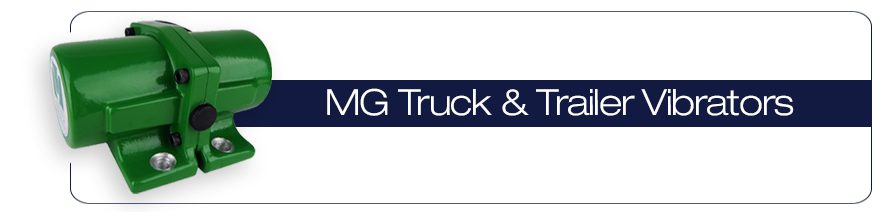
If you are in the truck and trailer industry servicing dry bulk materials, you know how much of a headache unloading materials like grain products, DDG, aggregates, and road salt can be when it sticks to the inside of your end dump or hopper bottom trailer. So, to ease the stress of these material flow problems, The Cleveland Vibrator Company introduced our 12 VDC electric-powered vibrators, the MG Truck and Trailer Vibrators, which are designed to handle tough material flow challenges and eliminate sticking material for any load size.

DC Vibrator, MG Vibrator, Truck and Trailer, Truck and Trailer Vibrator, Trailer Vibrator, Electric Vibrator, electric vibrating motor
Read More…
Share this blog post:
FacebooktwitterlinkedinmailFacebooktwitterlinkedinmail
Avatar

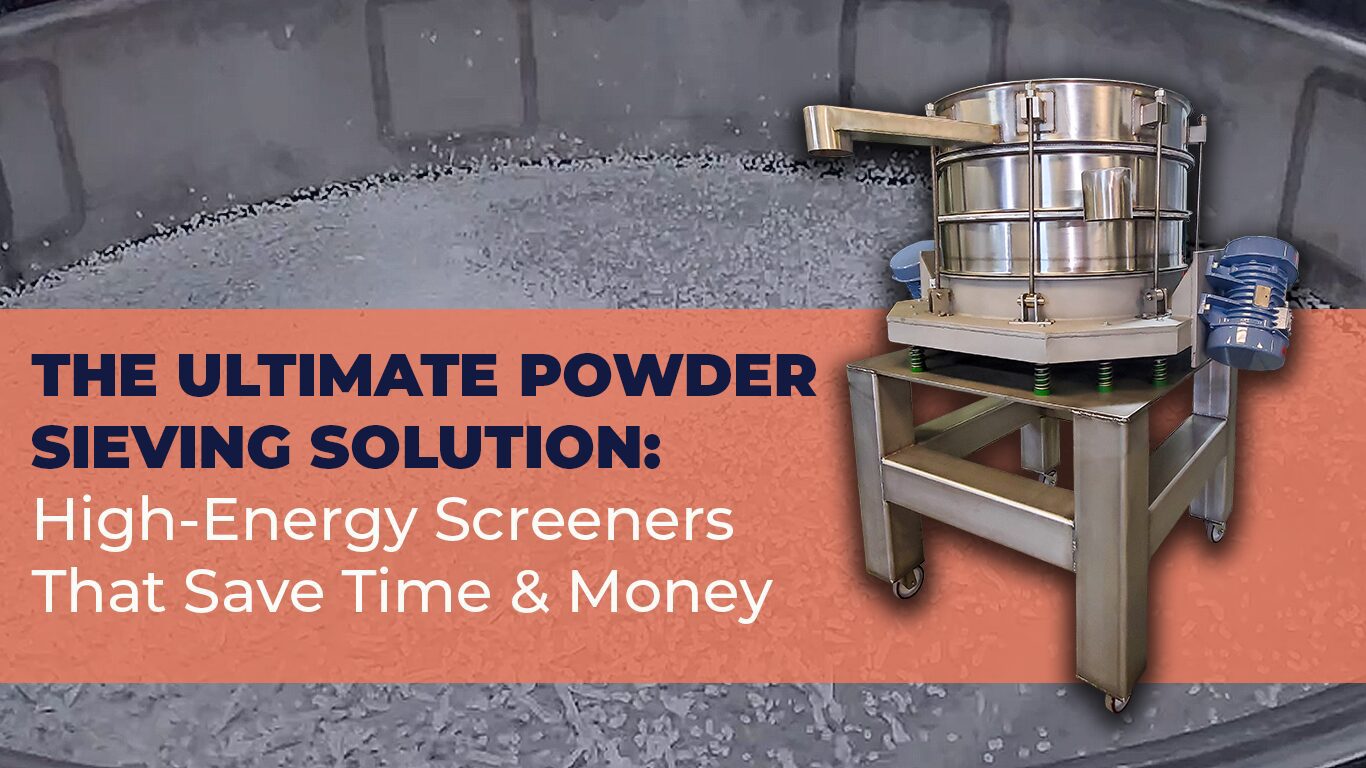
The Ultimate Powder Sieving Solution: High-Energy Screeners That Save Time & Money

By CVC Team

Advanced powder screening technology needs are increasing for high-energy sieving screeners, calling for smaller particle sizes with stricter specification requirements. Industries that work with dense materials, such as 3D printing or additive manufacturing, need precise control over particle size for production. This contributes to maintaining the desired quality and consistency of the powder material.

The problem with high-density materials is their tendency to blind the screen deck when using traditional ultrasonic sieving solutions. Other screens deblinding solutions like sliders or ball tray decks don’t provide the efficiency to keep operations running smoothly.

The VertaBrute Series by HK Technologies is a cutting-edge powder sieving solution that provides numerous advantages to tackle these screen blinding challenges in your powder processing.

Boost productivity and cut costs and downtime in operations.

Simple design elements, such as quick screen changeover, keep powder processing operations moving. A screen frame securely holds a loose wire mesh cloth above a fixed wire mesh, eliminating the use of any adhesives on the screen deck. Operators can store a variety of screen mesh sizes in-house and can switch out the loose mesh screen at any time, providing the ultimate flexibility in powder processing.

Read More…
Share this blog post:
FacebooktwitterlinkedinmailFacebooktwitterlinkedinmail
1 2 3 18  Scroll to top