Industrial Vibrator Beat

Avatar

The Evolution of Industrial Vibrators: From Pneumatics to Electric Powered Vibrators in the 20th Century

By CVC Team

The Cleveland Vibrator Company started manufacturing air-operated vibrators in 1923 and for several years air vibrators are all we pretty much offered. This worked well in our primary foundry customer base through the first half of the 20th century. As we expanded our customer base, we found more and more customers wanting to use electrical power to operate the industrial vibrators. It became obvious that we needed to give our sales staff an alternate source besides air to offer our valued customers.
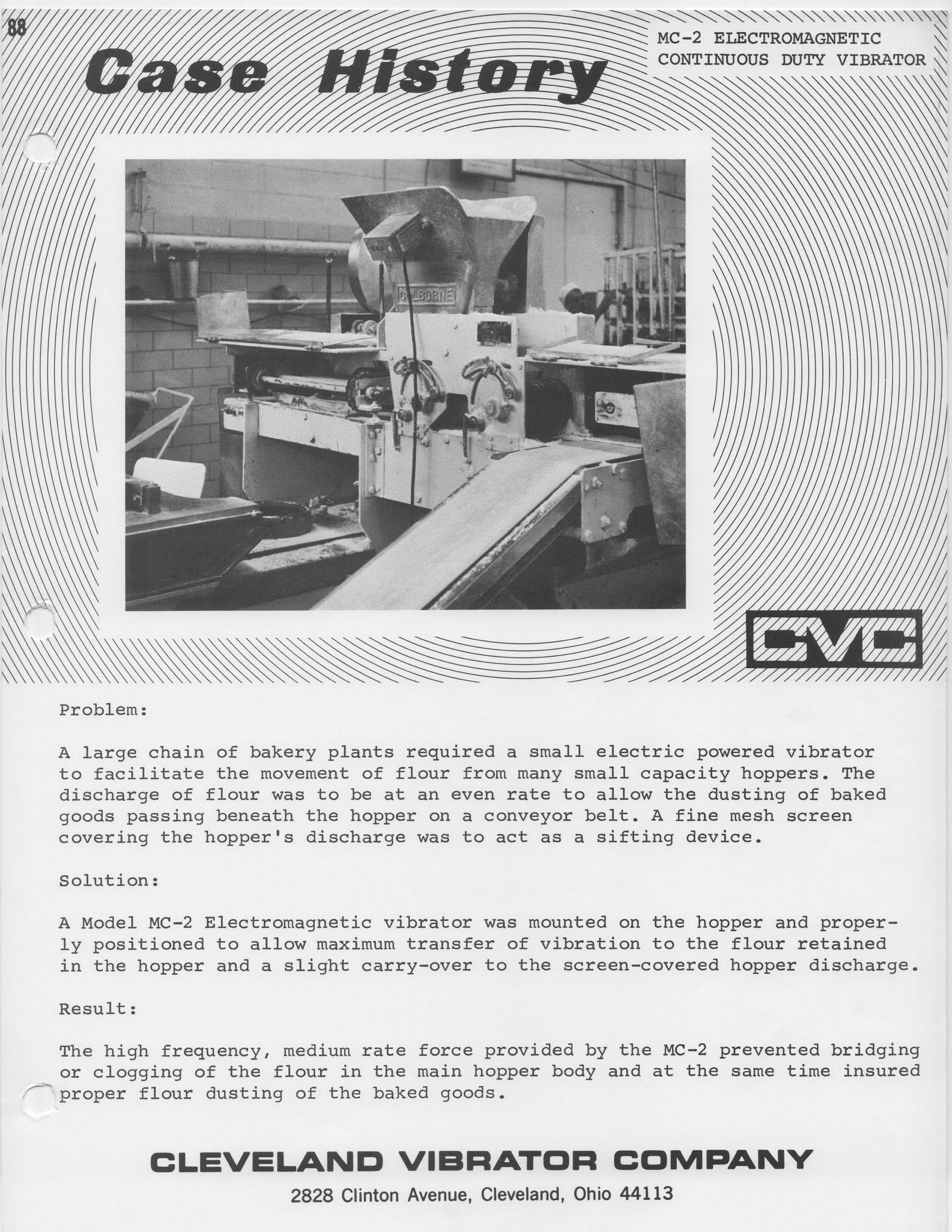
88-mc-2-electromagnetic-continuous-duty-vibrator-aid-large-chain-of-bakery-plantsWe started with fairly basic electromagnetic vibrators with the MC-1, MC-2, etc. and started to introduce these units into the marketplace. The MC series is considered the “grandfather” to our current CM-5, CM-10, and CM-30 and more recent Super 30 vibrators. You can see a success story of this product in the field in the case study on the right-hand side of this paragraph. In the early ’60s, we contracted with a company from Sweden called Dynapac to market and sell their rotary electric vibrators mostly here in North America. They were supplied in 1800 RPM and 3600 RPM (revolutions per minute) which opened the door to customers having hoppers, bins, chutes, bunkers as well as other applications which include vibratory tables, feeder, and screeners. Read More…


Share this blog post:
FacebooktwitterlinkedinmailFacebooktwitterlinkedinmail
Jack Steinbuch

Let’s Clear the Air on Vibratory Drives for Hazardous Locations

By Jack Steinbuch

Over the years I’ve received a number of requests for industrial vibrators or vibratory equipment that need to operate in a hazardous location.  Most requests include the classifications they are either given or think they need, but often aren’t familiar enough with them to know what their application may really require.  I believe, for vibrating motors especially, that most confusion stems from recognizing the difference between dust-tight and explosion-proof construction.

Our challenge for these applications is to clarify the classification being requested and offer possible alternatives to meet them.  First, to my understanding, pneumatic powered drives are acceptable for any hazardous location. You only need to be concerned if you use an electrically activated valve to start/stop it, to make sure it meets the classification of the hazardous area.

Read More…
Share this blog post:
FacebooktwitterlinkedinmailFacebooktwitterlinkedinmail
Craig Macklin

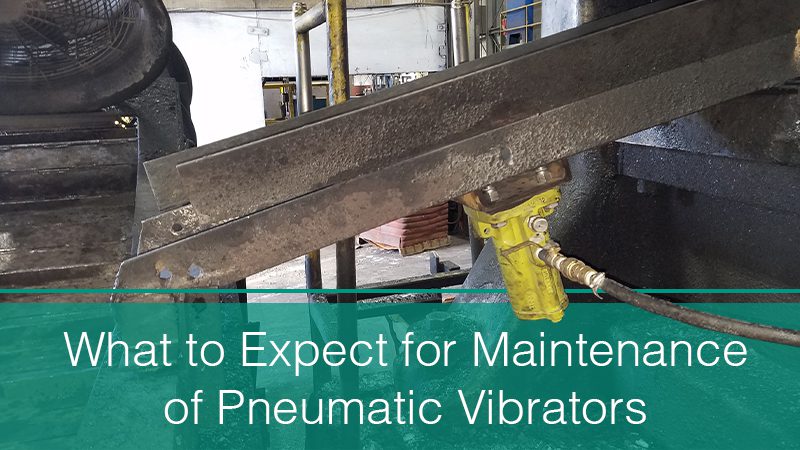
What to Expect for Maintenance of Your Pneumatic Vibrator

By Craig Macklin

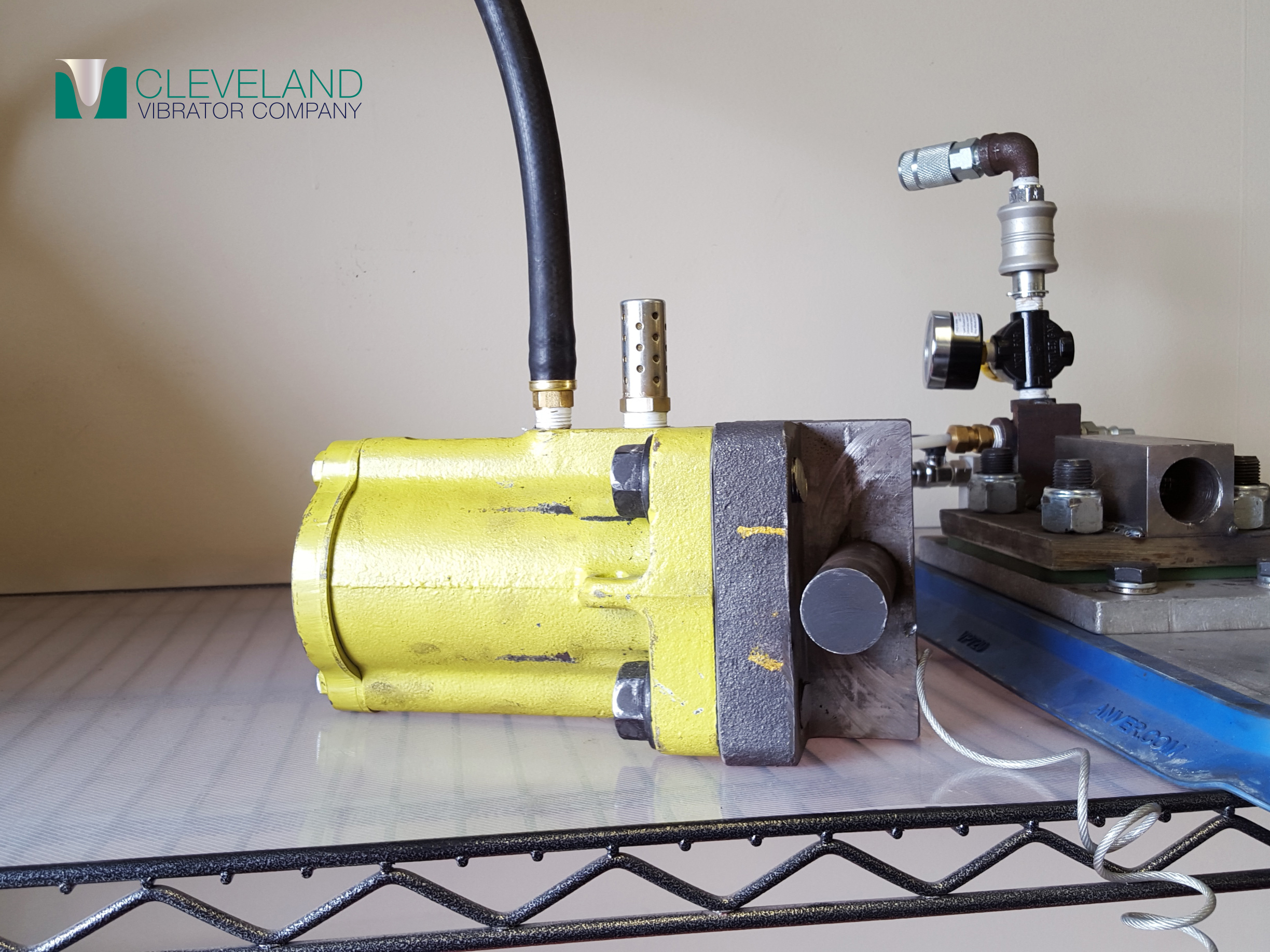
As my incredibly knowledgeable associate, Mike Stratis, wrote a blog about accessories to consider for installing an air-powered vibrator, I thought I would provide a follow-up piece to discuss what to expect AFTER the install. As with any equipment, pneumatic vibrators and their supporting accessories require love, attention, lubrication, and cleaning. Here is what to expect if you want to get the longest and most consistent life out of your pneumatic vibrator, whether a piston, turbine, or ball.

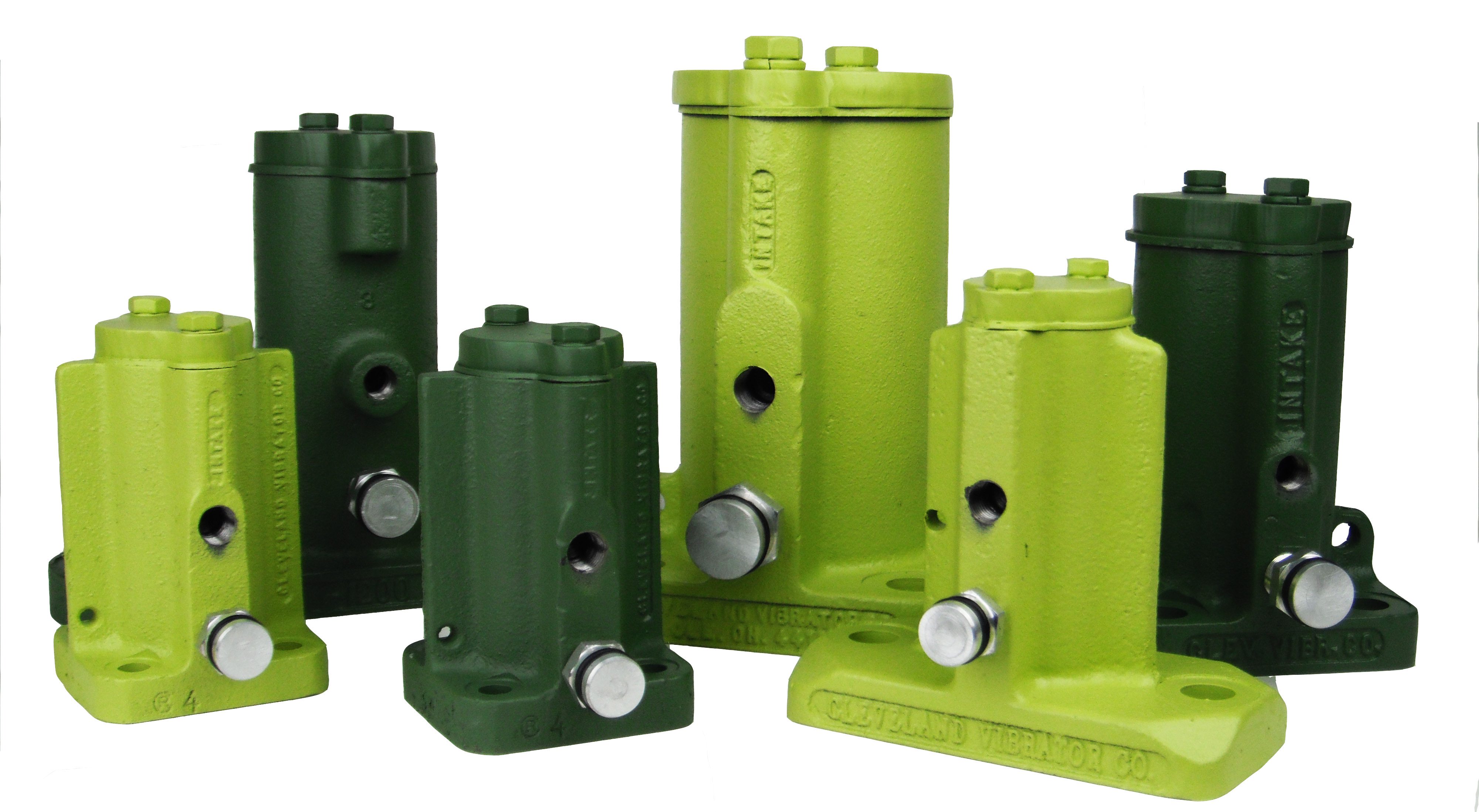
Air Piston Pneumatic Vibrator

Cleveland Vibrator Pneumatic Piston Vibrator Group Shot

Lubrication

Firstly, you must check your lubricator with some frequency. If you operate continuously, you might check and/or refill every 1-3 weeks. If your use is intermittent or infrequent, you might schedule on a 1-4 month basis. The use of internal coating in the vibrator can reduce or remove the need for lubrication. But, coatings without lubrication will typically wear out faster than a coated or uncoated piston vibrator that is properly lubricated. Depending on the size and duty cycle of your vibrator, you might use a pint of lubricant every 2 weeks – 2 years. We recommend our MXR-12 VibraLube, which is 10W-NR.

Read More…
Share this blog post:
FacebooktwitterlinkedinmailFacebooktwitterlinkedinmail
Mike Stratis

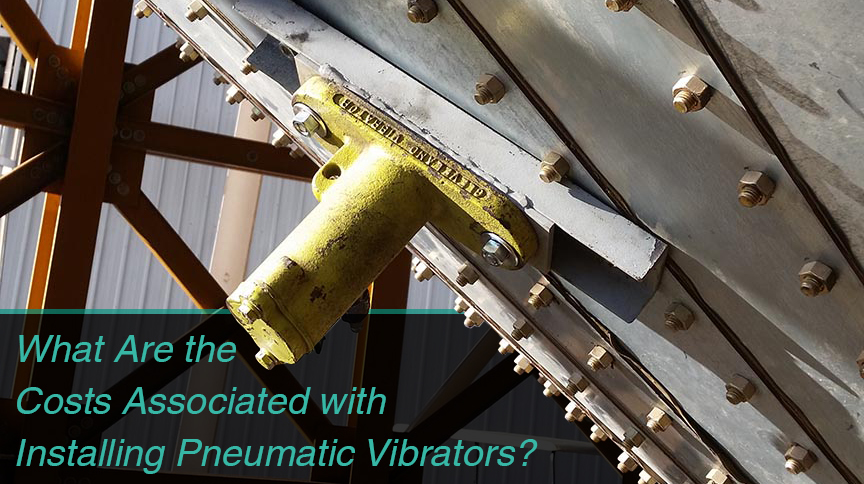
What Are the Costs Associated with Installing Pneumatic Vibrators?

By Mike Stratis

When it comes time to review solutions to the material flow problems inside the hopper, pipe, or chute, there are a few things to keep in mind when putting together a budget for the project. Besides the vibratory flow aid itself, there are additional components required before installing the unit. We will discuss these items and estimated costs of acquiring these components. Here is the shortlist:

  1. Industrial vibrator – pneumatic piston vibrator, single impact air knocker, pneumatic turbine vibrator, pneumatic ball vibrator
  2. Safety cable
  3. Mounting channel or plate
  4. Hose to connect the vibrator to the on/off valve
  5. On/off valve
  6. Hose to connect on/off valve to air prep component (filter/regulator or filter/regulator/lubricator)
  7. Lubricant (if necessary)

Depending on the size of the hopper or piece of equipment that the pneumatic vibrator is going to be installed on, the price of the vibrator itself can range from about $100 to as much as $10,000. But, within that range, the vast majority of the units are going to be between $100-$1000. Read More…


Share this blog post:

FacebooktwitterlinkedinmailFacebooktwitterlinkedinmail
Avatar

Vibrator Coating Testing Results: Only Time Will Tell

By CVC Team

Some time back in the mid-60s Cleveland Vibrator started working with coating technology in an effort to improve the performance and longevity of our line of pneumatic piston vibrators.  For best operation, while consuming a minimum of compressed air, the piston and the body of any pneumatic piston vibrator need to be very closely matched.  Clearance between the moving piston and the fixed body is very fine, in certain installation orientations, the piston rides on the body of the vibrator creating a metal-on-metal contact area.  Because of the metal-on-metal contact, it is recommended to supply a pneumatic piston vibrator with lubricated air.  The appropriate amount of oil mist in the air stream will lubricate the moving parts, reducing the coefficient of friction between the surfaces and extend the life of the vibrator.

Cleveland Vibrator’s investigation into and early use of friction-reducing coatings was designed to leverage the benefits of the coating to enhance the performance and extend the life of the vibrator by reducing parts wear due to friction.  If not properly maintained and lubricated a piston vibrator will start to wear due to the piston/body surface contact.  Indicators of excessive wear will be reduced performance, less force output, and more air consumed at the same operating pressure.  As the piston and body wear over time, the gap between the two parts will increase, with the larger spacing air can “blow by” the piston, blow by air isn’t effectively used by the vibrator to generate force it simply exhausts out of the body.  Read More…
Share this blog post:

FacebooktwitterlinkedinmailFacebooktwitterlinkedinmail
Mike Stratis

Truck & Trailer Loads Demand A Tough Solution – What Are Your Vibratory Options?

By Mike Stratis

When it comes to unloading dry or semi-dry bulk materials from a hopper trailer, belly dump, side dump, end dump, or similar type of truck, a few vibratory options are available to the market. Depending on the power supply available on the mobile equipment, air or electric, the vibratory components change. We will first look at the air-powered vibrator options then turn to the electric-powered vibrator options.

Air Powered Options

Piston Style Vibrator

The pneumatic or air-powered units that are available are the piston-style vibrator or the turbine-style vibrator. These two are by far the most common air-powered vibrators found on mobile equipment. The Vibra-Might Air Piston Vibrators are popular units in the field because these vibrators have a dual-diameter piston that allows for start-up at any mounting angle, and there is no spring on the inside of the vibrator. No spring = less wear parts.

These vibrators also have a single exhaust port and come standard with the exhaust port protector. The exhaust port protector helps keep dust, dirt, water, and other contaminants out of the bore of the vibrator. These Vibra-Might air piston vibrators come in both 4-bolt square base and 2-bolt rectangular base designs. The 2-bolt design is more common, and the slotted bolt holes of the 1200 VMR (impacting piston) or 1200 VMRAC (non-impacting piston) cover a wide range of new or existing bolt patterns. Also, if there is no oiler or lubricator on the truck itself, we offer coated casted bodies that can operate with or without lubricant. Adding lubricant will help the longevity of the vibrator, but it is not necessary.

Read More…
Share this blog post:
FacebooktwitterlinkedinmailFacebooktwitterlinkedinmail
Mike Stratis

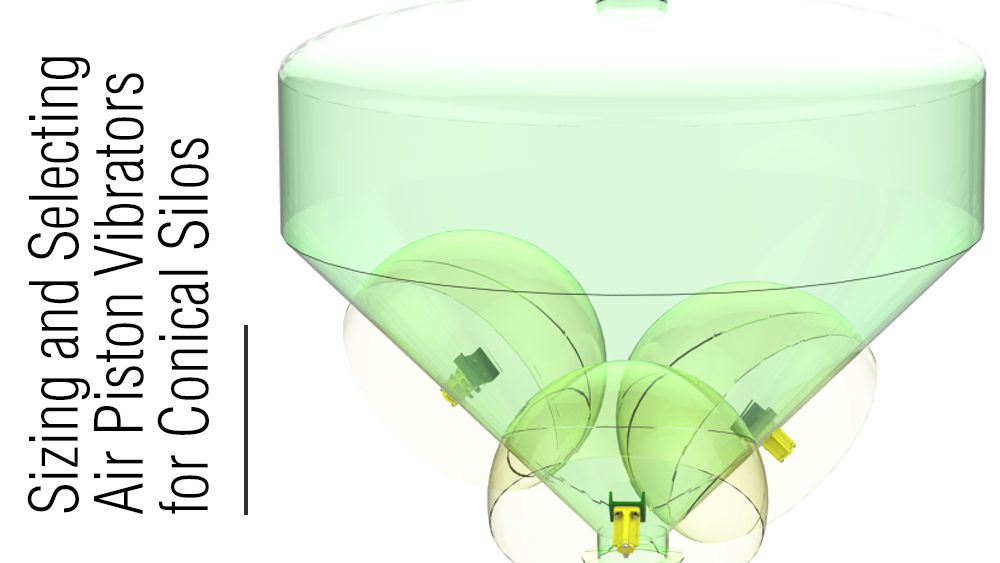
Sizing and Selecting Air Piston Vibrators for Conical Silos

By Mike Stratis

When turning to a pneumatic air piston vibrator for bin cleanout or bulk material flow for your material storage vessel with a conical silo transition hopper, there are a few things we review to help determine the best unit for the job. Here are the various sets of criteria we review before making a recommendation:

  1. Number of vibrators needed
  2. Strength of vibrator needed
  3. Best air piston vibrator for application

Step One: Find the Number of Vibrators Needed

We look at the geometry of the vessel to find the number of vibrators recommended for the conical silo hopper. The vessel’s geometry, size, and shape tell us the number of vibrators needed for the most effective vibration transfer into the material. There are about 5 feet of effective radius for the vibration energy from where the vibrator is mounted. Here is a visual aid that allows you to see how many vibrators are needed based on the size of your hopper.

Read More…
Share this blog post:
FacebooktwitterlinkedinmailFacebooktwitterlinkedinmail
Avatar

Niche Business, It’s What We Do

By CVC Team

All organizations that have stayed in business for many years have “go-to folks” they depend on when difficult situations or tough problems arise that need to be taken care of. For example, how many times have we watched a football game and experienced the quarterback take his team 90 yards in under two minutes to win a game or the linebacker or safety make that key tackle or interception for a last minute victory? If you root for every team but the Browns, we’re sure you’ve experienced this enough to know the importance the role these key players fulfill. These are go to folks and it is no different in the business world, especially here at The Cleveland Vibrator Co.

I think we are blessed with several go to folks on our team. When a customer calls Cleveland Vibrator, they are not just talking to a sales associate but to engineering, manufacturing, purchasing, marketing, shipping and yes, even our owners from time to time. I believe this collectively makes Cleveland Vibrator a “go to company” for many special applications. I call this our “NICHE” business and feel it has been one of Cleveland Vibrator’s strengths, even before I was given the opportunity to join the team in 1968. Read More…
Share this blog post:

FacebooktwitterlinkedinmailFacebooktwitterlinkedinmail
Mike Stratis

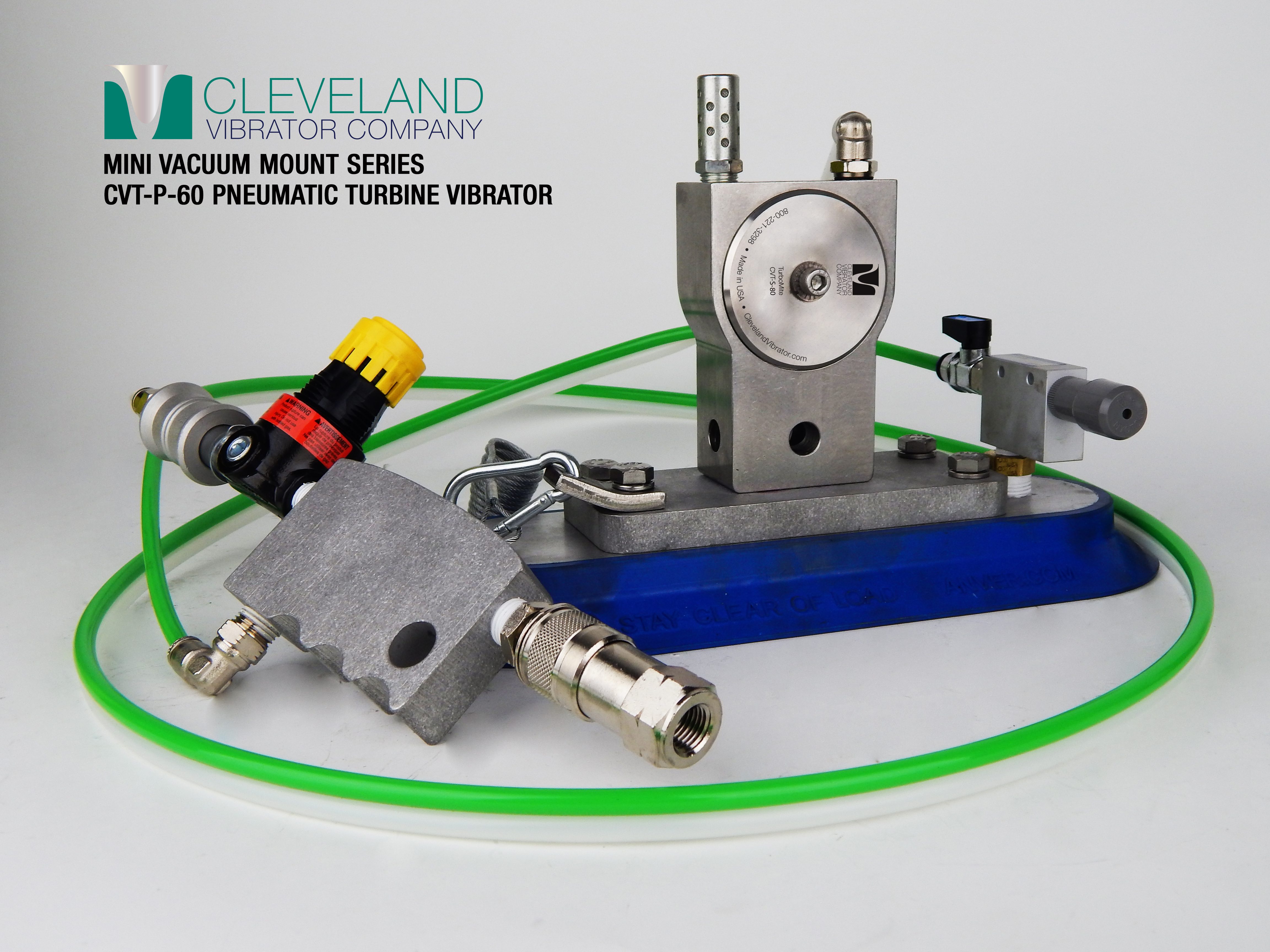
How to Operate Cleveland Vibrator’s Vacuum Mounted Series Units

By Mike Stratis

The Cleveland Vibrator Company has been manufacturing pneumatic piston vibrators since 1923. During that time, there have been a wide range of new products developed and released as the industries change. A great recent example of this innovation is the Vacuum Mount Vibrator Series.

The first generation of the Vacuum Mount family was designed around the flagship product, air piston vibrators, to accommodate a wide range of applications and mounting locations. The air piston vibrators that are used are the VMSAC models, these are the non-impacting or air-cushioned piston vibrators. The reason for the non-impacting model is because the impacting model’s steel piston inside the ductile iron casted body provides a large amount of force that actually breaks the suction of the vacuum cup when installed on a bin, hopper trailer, dump bed truck, slip form or other application.

After the success of the first generation, with the VMSAC models, we expanded into the pneumatic turbine vibrators. This has allows us to provide many more options and sizes to help meet the demands of the user’s application. The original family within the product line contained four models (1125 VMSAC, Read More…


Share this blog post:

FacebooktwitterlinkedinmailFacebooktwitterlinkedinmail
Mike Stratis

Tired of Using the Hammer?

By Mike Stratis

There is something to be said about the functionality of a hammer. These tools can be used for a variety of applications, constructive or destructive purposes and are often lightweight components which makes them easy to carry around a shop floor. In this industry, we see and hear them used on day bins, surge bins, bulk storage hoppers, material transfer pipes and other similar equipment to break up bridging or rat-holing product and promote material flow. While this is certainly a quick fix and can help the material flow problems that day, there are a few potential long term issues that can arise when using a dead blow or sledge hammer to break loose the material.

First thing that comes to mind for the Cleveland Vibrator team, and most importantly in our eyes, is the safety of the operator. When using these hammers on bin or hopper, many times the operator is lifting the hammer above shoulder level and swinging up at a bin on a regular basis. Read More…


Share this blog post:

FacebooktwitterlinkedinmailFacebooktwitterlinkedinmail
1 2 3 4 5 7  Scroll to top