Industrial Vibrator Beat

Avatar

Industrial Vibrator Installation & Troubleshooting FAQs 

By CVC Team

Correct sizing is only part of a successful industrial vibration application. The vibrator must also be mounted in the correct location, attached to a properly designed mounting structure and supplied with the correct air or electrical power.

Many performance and equipment-life problems can be traced to installation or maintenance issues such as loose mounting hardware, poor vibration transfer, inadequate pneumatic airflow or incorrect rotary-electric vibrator setup.

Read to Learn More: Proper Installation of Industrial Vibrators

Where should an industrial vibrator be installed on a hopper?

Mount the vibrator where its energy can reach the material-flow problem.

For a typical sloped hopper, the first vibrator is commonly located partway up the sloped wall from the discharge. Multiple-vibrator installations use additional locations and staggered heights based on vessel geometry.

Read to Learn More: Proper Installation of Industrial Vibrators

Do I need a mounting channel or mounting plate?

In many bin and hopper applications, yes. The mounting channel or reinforcement structure helps transfer the vibrator’s force into the vessel wall over an appropriate area rather than concentrating the load at the vibrator’s bolt pattern.

A properly designed mounting system is important for both vibration performance and vessel integrity.

Read to Learn More: Stopping Fatigue Failure During Vibrator Installation

Can I bolt an industrial vibrator directly to a hopper wall?

That depends on the vibrator and vessel design, but simply bolting a vibrator to an unsupported thin wall is generally not the preferred approach for many hopper applications.

Mounting channels or stiffener plates can distribute vibratory energy and provide a rigid mounting surface.

Read to Learn More: Proper Installation of Industrial Vibrators

Should the mounting channel be continuously welded to the hopper?

Follow the installation instructions for the specific mounting arrangement. General bin-vibrator guidance may call for stitch welding a mounting channel or stiffener plate rather than a continuous weld, depending on the design.

The purpose is to transfer vibration effectively while avoiding stress concentrations that can contribute to fatigue.

Read to Learn More: Proper Installation of Industrial Vibrators

Why do my vibrator mounting bolts keep coming loose?

Vibration naturally places cyclic loads on the mounting system, so correct hardware, torque and inspection are important.

Loose bolts can allow the vibrator body to move relative to its mounting surface, reducing performance and potentially accelerating wear.

Read to Learn More: Tighten Those Bolts: Pneumatic Vibrator Maintenance

How often should vibrator mounting bolts be checked?

Inspection frequency should reflect how frequently and severely the vibrator is used. A high-duty application should be inspected more frequently than a unit that operates only occasionally.

Periodic mounting-bolt checks are important because loose hardware can reduce performance and contribute to mechanical problems.

Read to Learn More: Tighten Those Bolts: Pneumatic Vibrator Maintenance

Why is my pneumatic vibrator not producing enough force?

Check the air supply before assuming the vibrator itself has failed.

Possible causes include insufficient pressure, inadequate airflow, an undersized hose or fitting, a restricted valve, contamination, an improperly configured filter/regulator/lubricator system or internal wear. An inadequate air supply can effectively choke a pneumatic vibrator.

Read to Learn More: Proper Installation of Industrial Vibrators

Does a pneumatic vibrator need a filter, regulator and lubricator?

It depends on the vibrator style.

Appropriate filtration and regulation of the air supply are generally important, while lubrication requirements vary. Some piston designs require lubrication, while certain turbine and ball vibrator designs do not require external lubrication.

Read to Learn More: Pneumatic Vibrator Maintenance

Why did my pneumatic vibrator stop working?

Potential causes include restricted or contaminated air, inadequate airflow, loose mounting hardware, internal wear, damaged seals or gaskets, or problems specific to the vibrator operating principle.

For piston vibrators, contamination and poor lubrication can accelerate piston and bore wear. Maintenance and troubleshooting should follow the IOM recommendations for the exact model.

Read to Learn More: Pneumatic Vibrator Maintenance

Why does my pneumatic vibrator sound like it is running but no longer works as well?

Wear can reduce force even while the vibrator still produces noise.

Some components can wear gradually, allowing a unit to continue sounding active even though useful vibration has diminished. Similar performance loss can occur when other components wear or the air supply changes.

Read to Learn More: Pneumatic Vibrator Maintenance

Why is my rotary electric vibratory equipment moving sideways?

One possible cause on a dual-motor brute-force system is incorrect motor rotation or synchronization.

Two rotary electric vibrators used to create linear vibration need to operate at the same speed in opposite rotational directions. If they are not properly counter-rotating or synchronized, the equipment may not produce the intended linear motion.

Read to Learn More: Rotary Electric Vibrator Troubleshooting

How do I know if two rotary electric vibrators are synchronized?

Both motors should be operating at the same speed in opposite directions, with their eccentric weights properly set.

A strobe can be used to observe the relationship between the two sets of rotating weights. When correctly synchronized, their positions should appear in the intended mirrored relationship.

Read to Learn More: Rotary Electric Vibrator Troubleshooting

Do the eccentric weights on two rotary electric vibrators need to be set the same?

Yes, on a paired-vibrator system designed for synchronized linear vibration, corresponding eccentric weights should be set consistently.

Unequal settings can result in unequal force output and interfere with the intended equipment motion.

Read to Learn More: Rotary Electric Vibrator Troubleshooting

Why are my rotary electric vibrators no longer synchronizing?

Possible causes include a developing problem with one motor, bearing or lubrication issues on applicable models, improper eccentric-weight settings or loose vibrator mounting bolts.

Mounting-bolt tightness and vibrator condition are important items to investigate when synchronized operation is lost.

Read to Learn More: Rotary Electric Vibrator Troubleshooting

Can improper vibrator installation damage a hopper?

Yes. Incorrect sizing, mounting location, reinforcement or installation can introduce stresses the vessel was not designed to handle.

An appropriately sized vibrator and properly designed mounting structure should work together to distribute vibration through the vessel rather than concentrate it at one small point.

Read to Learn More: Proper Installation of Industrial Vibrators


Share this blog post:
FacebooktwitterlinkedinmailFacebooktwitterlinkedinmail
Avatar

Industrial Vibrator Selection & Sizing FAQs 

By CVC Team

Selecting an industrial vibrator involves more than finding a model with enough force. The right solution depends on what you are trying to accomplish, the material being handled, the size and construction of the vessel or equipment, the available power source and the way vibration needs to interact with the material. 

Cleveland Vibrator uses a selection process that considers the number of vibrators required, the force required and the most appropriate vibrator type. Vessel geometry, material characteristics, wall thickness, operating environment and the specific material-flow problem all play a role in the final selection. 

Read to Learn More: Industrial Vibrator Selection Guide 

How do I choose the right industrial vibrator? 

Start with the application rather than the vibrator. Determine what you need vibration to accomplish: promote bulk material flow, eliminate bridging or ratholing, clean material from vessel walls, compact material, feed product or address a localized material hang-up. 

Next, consider vessel geometry, material characteristics, required force and frequency, wall thickness, operating environment and available power. Those factors narrow the selection to the appropriate vibrator type and size. 

Read to Learn MoreIndustrial Vibrator Selection Guide 

What information is needed to size an industrial vibrator? 

For a bin, hopper, chute or pipe application, useful information includes: 

  • Vessel dimensions and shape 
  • Hopper or wall thickness 
  • Material being handled 
  • Material bulk density 
  • Whether the material is dry, sticky, cohesive or prone to packing 
  • The location and nature of the material-flow problem 
  • Whether the objective is bulk flow or final cleanout 
  • Available electrical power or compressed air 
  • Operating environment and hazardous-area requirements 
  • Current mounting arrangement, if one exists 

Read to Learn MoreIndustrial Vibrator Selection Guide 

How much vibratory force do I need? 

Required force depends on the application and the amount of material or structure that must be influenced. For bin and hopper flow applications, the sizing process considers vessel geometry and the portion of the material load relevant to the application. 

Force should not simply be maximized. Excessive force can waste energy, create unnecessary stress on the structure and produce poor process results. Correct sizing means applying the appropriate amount of energy for the job. 

Read to Learn More: Sizing and Selecting Air Piston Vibrators 

Can an industrial vibrator be too powerful? 

Yes. More force is not automatically better. 

An oversized vibrator can introduce more vibration than the structure or process requires. In compaction applications, excessive energy can even aerate or fluidize certain materials rather than compacting them efficiently. In bin and hopper applications, correct vibrator sizing and mounting are important for effective material flow and equipment life. 

Read to Learn MoreStroke, Frequency and Force: Keys to Vibratory Compaction 

How many vibrators do I need on a bin or hopper? 

The number of vibrators depends primarily on the size and geometry of the vessel and where vibration must be transferred. A properly sized vibrator has a finite area of influence, so larger vessels may require multiple smaller vibrators instead of one oversized unit. 

Multiple vibrators can distribute vibration more effectively across the problem area while avoiding excessive force concentrated at one mounting location. 

Read to Learn MoreIndustrial Vibrator Selection Guide 

What is the difference between vibration force and frequency? 

Force is the amount of vibratory energy being applied. Frequency is how often the vibration occurs, typically expressed as vibrations per minute, or VPM. 

The correct combination matters. Different materials respond differently to frequency, force and the resulting stroke or displacement. 

Read to Learn More: Stroke, Frequency and Force: Keys to Vibratory Compaction 

What is vibration amplitude or stroke? 

Stroke is the displacement or distance of the vibrating movement. It is influenced by the relationship between vibration frequency and force. 

Higher-frequency vibration typically produces a smaller stroke, while lower-frequency vibration can produce a larger displacement. The best combination depends on the material and what the vibration is intended to accomplish. 

Read to Learn MoreStroke, Frequency and Force: Keys to Vibratory Compaction 

Does higher vibration frequency mean better material flow? 

Not necessarily. The best frequency depends on the material and application. 

Fine, dense materials may react differently from lightweight, coarse or cohesive materials. Increasing frequency without understanding the material response may not improve flow and can sometimes create an undesirable result. 

Read to Learn MoreStroke, Frequency and Force: Keys to Vibratory Compaction 

Should I use a pneumatic or electric industrial vibrator? 

Both can be effective. The best choice depends on your facility and application. 

Pneumatic vibrators are available in several operating principles, including piston, turbine and ball designs, and are useful where compressed air is readily available or where a particular impact or linear vibration characteristic is desirable. Electric options include rotary electric, DC and electromagnetic vibrators and can be attractive where electrical power is more convenient than compressed air. 

Read to Learn MoreIndustrial Vibrators 

What type of vibrator is best for sticky material? 

For bin and hopper applications involving cohesive or sticky material, an impacting vibrator may be appropriate because the impact can help break material loose from the vessel wall. 

A single-impact air knocker may also be considered when the problem is concentrated in a particular area or when final cleanout is the objective. 

Read to Learn MoreSizing and Selecting Air Piston Vibrators 

What type of vibrator is best for dry, free-flowing material? 

Dry material may respond well to non-impacting vibration. Non-impacting piston designs are commonly considered for bulk flow of dry materials such as grain and dried aggregates. 

The final selection still depends on vessel geometry, required force, wall construction and available utilities. 

Read to Learn MoreSizing and Selecting Air Piston Vibrators 

Does hopper wall thickness affect vibrator sizing? 

Yes. Wall thickness affects how vibration is transferred into the structure and is one of the variables considered when sizing a bin or hopper vibrator. 

If the vessel wall is too light for the required vibrator force, reinforcement or a properly designed mounting arrangement may be necessary. If the wall is substantially heavier, more vibratory force may be required to effectively transmit vibration. 

Read to Learn MoreSizing an Industrial Vibrator on a Bulk Barge Hopper 

Can I use one large vibrator instead of several smaller vibrators? 

Sometimes, but it is not always the best approach. On larger vessels, several correctly sized vibrators can distribute energy to multiple areas more effectively than concentrating a large amount of force in one location. 

The goal is effective coverage of the problem area without unnecessarily concentrating force. 

Read to Learn MoreSizing an Industrial Vibrator on a Bulk Barge Hopper 


Share this blog post:

FacebooktwitterlinkedinmailFacebooktwitterlinkedinmail
Avatar

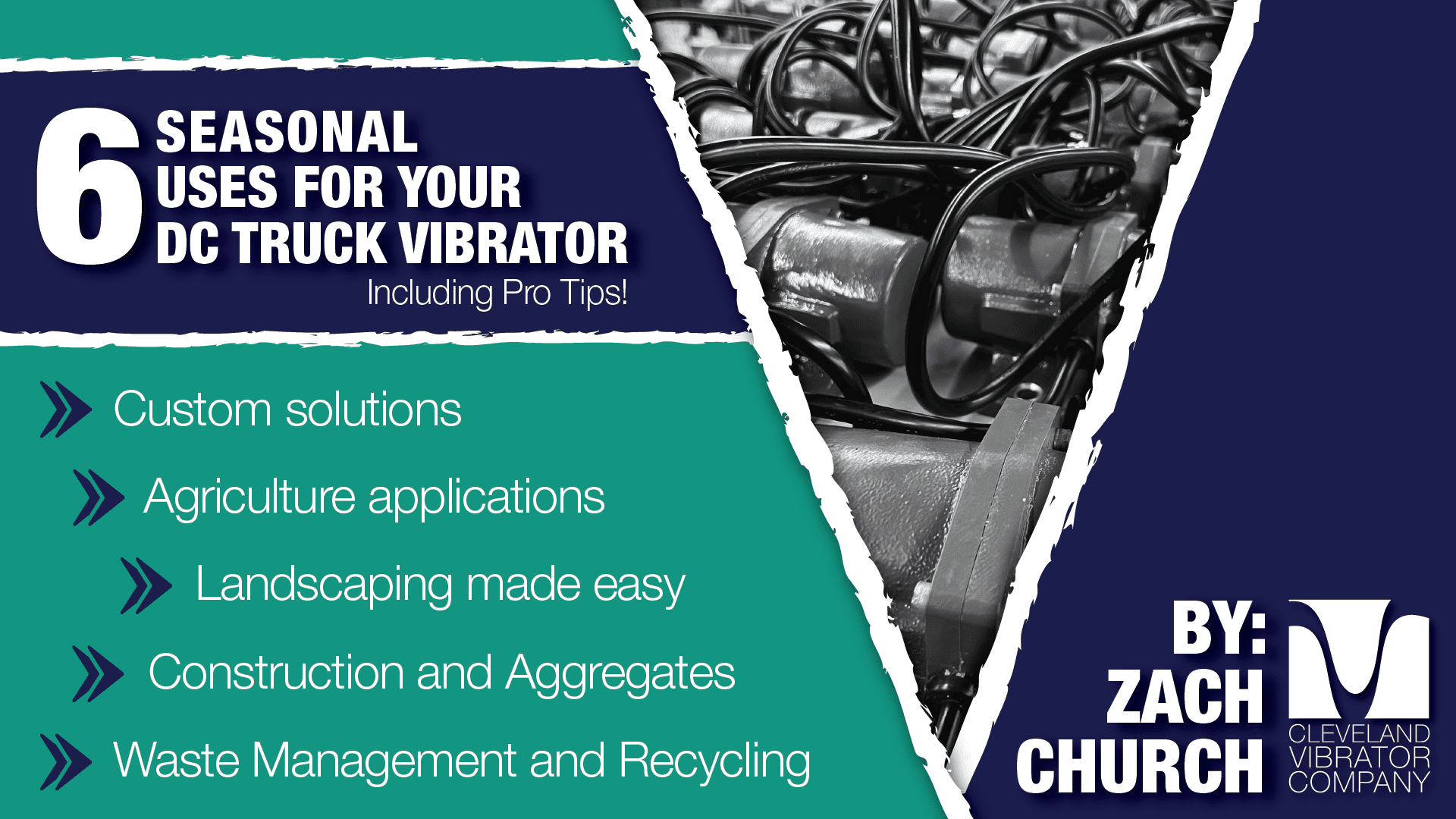
Six Proven and Effective Seasonal Uses For Your New DC Truck Vibrator

By Zach Church

When there is winter there is snow and ice, a sad fact of life. It’s up to the snow and ice management teams to ensure that roads and parking lots are safe for travel. For those in the snow/ice management business, DC vibrators are an essential tool that evenly distributes salt and de-icing materials.  

But as the snow melts and the weather warms up, many overlook the fact that these vibrators are far from being just snow season tools. You can use DC vibrators across numerous industries year-round, making them versatile pieces of equipment. 

Here’s how your DC vibrator can go beyond just the winter season: 

LANDSCAPING MADE EASY 

In the spring, when the landscaping season kicks into high gear, DC vibrators make the transition seamless. Whether you’re spreading mulch, gravel, or topsoil, a properly equipped truck ensures these materials flow smoothly and quickly from your hopper or dump trailer. This increases your efficiency, reducing the need for manual labor and rework. The same vibration that helps salt flow freely in the winter can also help your soil or mulch from clumping, making it easier to spread across large areas. 

PRO TIP: Just like in the winter, ensuring that your DC vibrator is appropriately installed and maintained is critical to preventing breakdowns during your busiest times. Regular checks of your mounting plate, bolts, and cables will keep your equipment running smoothly through any season. 

AGRICULTURE APPLICATIONS 

In the fast-paced world of agriculture, the versatility of our DC vibrators is a game changer for famers and agricultural professionals a like. Whether spreading fertilizer, seeds, or feed, having a reliable vibrator ensures consistent flow, preventing blockages and uneven distribution. This can be particularly beneficial during the planting season when time is of the essence and equipment downtime is especially costly. 

PRO TIP: It is crucial to adjust the vibratory force based on the type of material being spread and the hopper being used. Heavier material and larger hoppers might require more force, while lighter, finer materials or smaller hoppers only need gentle vibration to keep things moving. 

CONSTRUCTION AND AGGREGATES 

In the construction industry, time is money. DC vibrators can efficiently spread aggregates like sand, gravel, and crushed stone. This is particularly useful in road construction and paving, where even distribution of materials is critical to the quality of the final product. When pouring concrete, a constant vibratory force can shake out air pockets and significantly reduce manual intervention. DC vibrators prevent materials from sticking to the hopper, keeping the project on schedule and your deadlines met. 

PRO TIP:  Be mindful of the hopper’s load and the density of the material being used. Dense materials, like concrete, might require stronger and more consistent vibration than something more porous. Additionally, monitor the spread rate to ensure that the vibratory force doesn’t cause material segregation or uneven distribution. Consider the position of the vibrator on the hopper or shoot. This will aid in the proper distribution of the material being spread. 

WASTE MANAGEMENT AND RECYCLING 

Within the demanding field of waste management and recycling, DC vibrators offer significant advantages to streamline operations. Whether dealing with organic waste, scrap metal, or end of year record shredding, these vibrators can help ensure that materials move smoothly down the hopper and into the shredder. This not only improves the operation’s efficiency but also reduces the risk of jams and bridging that can occur, leading to costly downtime. 

PRO TIP: In harsh environments like waste management, it’s especially important to regularly inspect the vibrator and its components for signs of wear and tear. Keeping the vibrator well-ventilated and free from debris will extend its lifespan and ensure reliable operation. 

CUSTOM SOLUTIONS FOR UNIQUE APPLICATIONS 

At Cleveland Vibrator, we understand that every operation is different, so we offer a range of DC vibrators designed to meet any need. From small tailgate spreaders to large heavy-duty hoppers, we can help you find the perfect solution for your specific application. And if your needs exceed our standard products, we’re always here to discuss custom solutions tailored to your unique challenges. 

PRO TIP: Don’t hesitate to reach out to our team if you have a specialized application in mind. Our experts are always available to help you select the right equipment and provide installation and maintenance advice to keep your operations running smoothly. 

VIBRATORS FOR EVERY SEASON 

As you can see, DC vibrators are far more than just winter tools. Their versatility makes them valuable assets in a wide range of industries, from landscaping, agriculture, construction, waste management, and more. By choosing the right vibrator and maintaining it properly, you can ensure that your equipment performs at its best, no matter the season.  

So, as winter ends and snow melts, don’t store away your DC vibrator just yet. Think about how you can use it in your other operations to save time and improve efficiency year-round. At Cleveland Vibrator, we’re here to help you make the most of your equipment, season after season. 

If you have any questions or need additional assistance, don’t hesitate to contact us. Our team is always ready to help you find the perfect solution for your needs. 

Let’s work together to keep your operations running smoothly, no matter the season! 


Share this blog post:
FacebooktwitterlinkedinmailFacebooktwitterlinkedinmail
Avatar

Reliable DC Vibrators Boost Profits for Snow & Ice Removal

By CVC Team

Operators waste valuable time manually freeing clumped rock salt out of their spreaders when an automated solution, like DC Vibrators, is available.

Over 70% of U.S. roads are located in snowy regions that experience more than 5 inches of snowfall yearly.

The national average snow removal costs and salt application for private homeowners/business entities were approximately $150/service date. Snow Plowing Forum suggests it typically takes to plow an average driveway is 10-15 minutes. *It should be noted that these numbers can fluctuate based on geographic location, weather severity factors, and individual location needs.

If we took a quick look at theoretical numbers, it would indicate that snow and ice removal businesses could make ~$720/hr. (~12.5 minutes/service x $150). What if one or two minutes per service were used to promote the flow of salt from the spreader hopper manually? This could result in a profit loss between 8% to 19% per hour, the worst-case scenario.

Read More…
Share this blog post:
FacebooktwitterlinkedinmailFacebooktwitterlinkedinmail
Steve Chinn

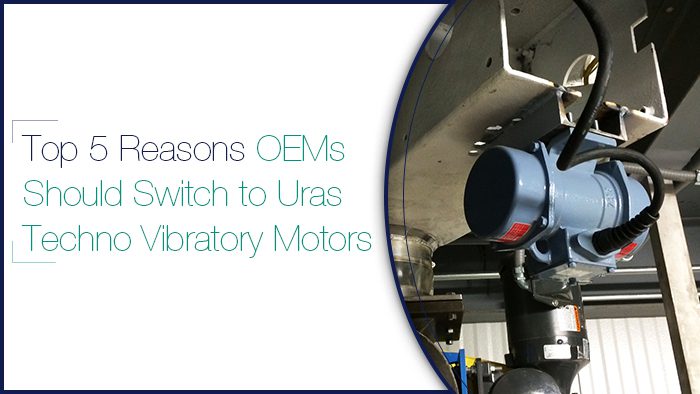
Top 5 Reasons OEMs Should Switch to Uras Techno Vibratory Motors

By Steve Chinn

In 1978, we were approached by a company specializing in rotary electric motors: Uras Techno. Sharing our goal of providing vibratory units built to the highest quality standard with options to fit each customer’s unique application – we found our perfect match! Since then, we have been the exclusive USA stocking distributor of their rotary electric motors. Together, we have helped many now-happy customers make the switch from competing brands.

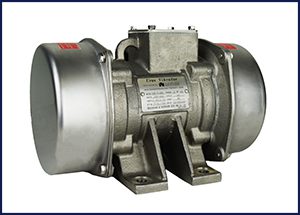
Stainless Steel, Vibratory Motor, Vibrating Motor, Food Grade, Rotary Electrics
Uras Techno Stainless Steel
Rotary Electric Motor

For example, a few months ago, an OEM (original equipment manufacturer) in the food industry was looking for an alternative vibrator for their feeder, which is used to transfer frozen fruit in their production process. The competing brand’s units had gaps in the design that were easily contaminated. This led to frequent downtime to clean the vibrators to avoid sanitary issues. Choosing to make the switch, they now experience less downtime thanks to their easy-to-clean Uras Techno stainless steel food-grade motors.

So, why should you take the leap and switch to Uras Techno?

Read More…
Share this blog post:

FacebooktwitterlinkedinmailFacebooktwitterlinkedinmail
Mike Stratis

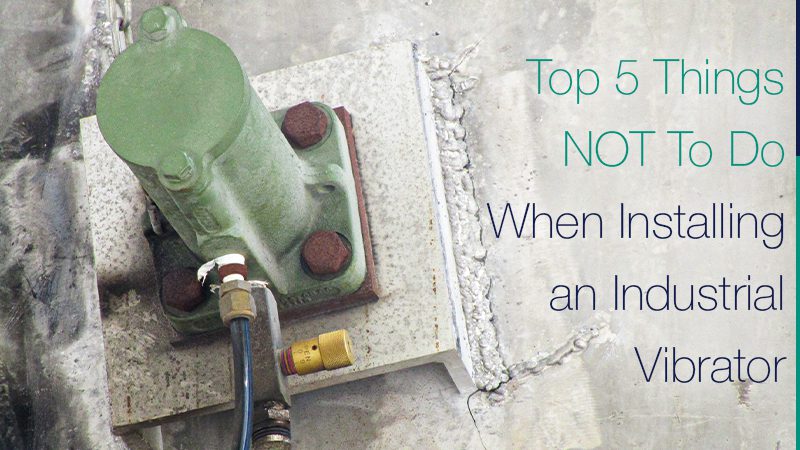
Top 5 Things NOT To Do When Installing an Industrial Vibrator

By Mike Stratis

Did you know properly installing your industrial vibrator can: Ensure you get the full benefits of optimizing your material flow? Prevent unnecessary downtime and damage to your equipment? Allow you to get the most bang for your buck when it comes to your ROI?

That’s why we have multiple blogs outlining what TO do when installing your industrial vibrator. This includes my previous blog, “The Importance of Proper Installation of Industrial Vibrators” or “Vibrators Don’t Damage Equipment, Wrong Installations Do” by Craig Macklin. However, in the hopes of saving you from future headaches, we need to address a very important subject: The Top 5 Things NOT To Do When Installing an Industrial Vibrator.

Read More…
Share this blog post:

FacebooktwitterlinkedinmailFacebooktwitterlinkedinmail
Avatar

Which Industrial Vibrator Works Best for Cold Temperature Applications?

By CVC Team

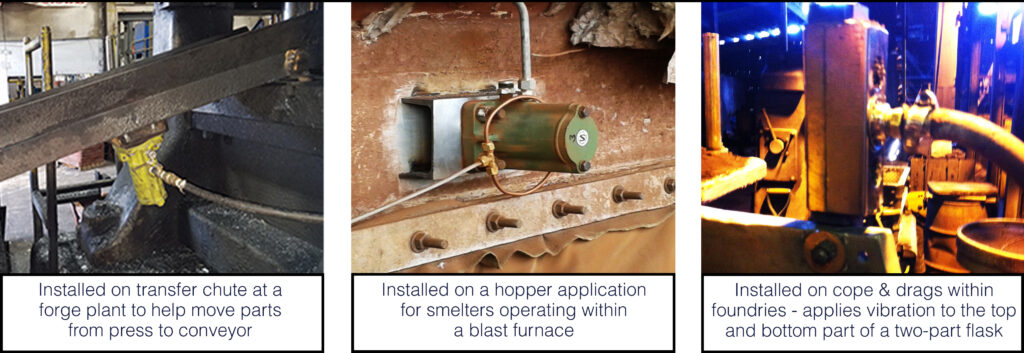
Previously, I wrote a blog about industrial vibrator options for hot temperature applications like transfer chutes in forging facilities or installations on cope & drags in a foundry. But what about those applications on the other end of the temperature spectrum?  

Let’s talk about those cold environment applications like outdoor installs on a silo, chute, or load-out spout in geographic locations that face frigid temps, hopper bottom trailers delivering goods when there’s snow on the ground, or within facilities that do not have climate control.  

When frigid temps are a factor, we lean towards supplying an electric vibrator option for material flow issues. Electric industrial vibrators do not require compressed airlines to operate, which is the biggest drawback when using pneumatic vibrators for these application environments. 

Between RE Rotary Electric Vibrators, CM Electromagnetic Vibrators, and DC Vibrators, plenty of voltage options, force outputs, and frequencies are available.  

Read More…
Share this blog post:
FacebooktwitterlinkedinmailFacebooktwitterlinkedinmail
Steve Chinn

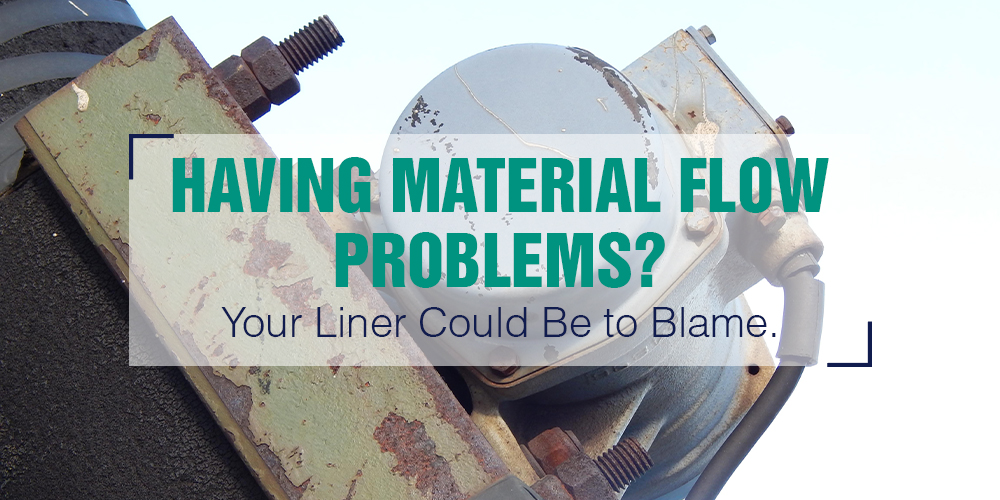
Having Material Flow Problems?  Your Liner Could Be to Blame.

By Steve Chinn

Material flow problems are time-consuming, messy, expensive, and can even contribute to workplace hazards. The tricky part? Many problems can slow down your production processes, such as applying the wrong vibration force and frequency for the application, issues with the installation of the vibratory flow aid, and even the size and style of the liner applied to the inside of your bin, hopper, chute, or pipe. 

That was the case with a customer who wanted to apply vibration to their ¼” thick wall chutes for sand processing. Previously, they manually cleaned their chutes with a garden hoe leading to unnecessary employee injuries, equipment damage, and production downtime. Knowing they have liners installed, we asked three important questions: 

Read More…
Share this blog post:

FacebooktwitterlinkedinmailFacebooktwitterlinkedinmail
Craig Macklin

5 Cool Industrial Vibrator Applications in 2020

By Craig Macklin

Industrial Vibrators and Vibratory Equipment can be used for so many different purposes that we never get bored working on customer inquiries to help them.  We get to work across dozens of industries with hundreds of material types and countless unique conditions, requirements, and problems.  So, it is fun to reflect on applications and problems we’ve solved near the end of a year.  This posting is just that, a moment of reflection and sharing.  Enjoy!! 

Read More…
Share this blog post:
FacebooktwitterlinkedinmailFacebooktwitterlinkedinmail
Avatar

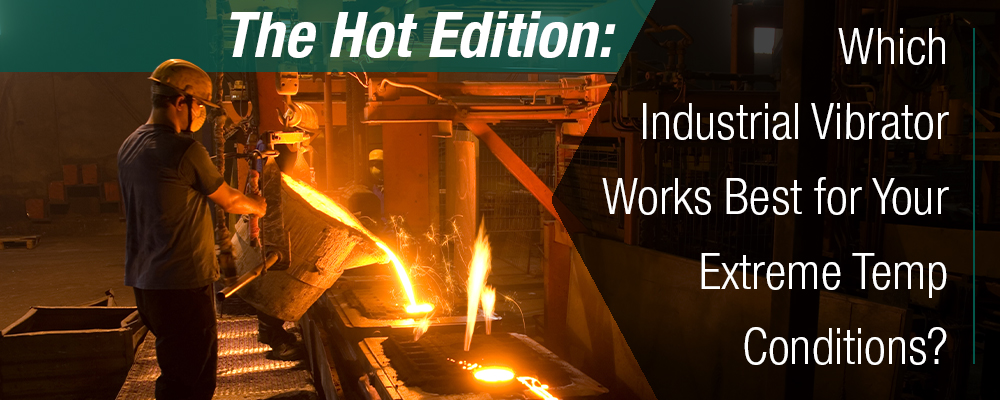
Which Industrial Vibrator Works Best for Your Extreme Temp Conditions?

By Cleveland Vibrator Team

Casting facilities pour molten metals into molds that require vibration to enable material flow and release air from the molten metal during the cooling process. Hot Forging Facilities feed metal ranging from 800 degrees Fahrenheit to 2200 degrees Fahrenheit, depending on the material they’re producing which may require vibration for their transfer chutes. These are just a few examples of material flow locations that vibration can be used within these facilities.

What is the one thing these applications have in common? Heat.

Read More…
Share this blog post:
FacebooktwitterlinkedinmailFacebooktwitterlinkedinmail
1 2 3 7  Scroll to top