
Jack Steinbuch

What You Need To Know About Screening Media – Part IV

By Jack Steinbuch

This blog is the fourth in a series that has been dedicated to typical screening media that are installed in Vibratory Screeners with their advantages and disadvantages so you can be in a better position to assist us in the selection process.

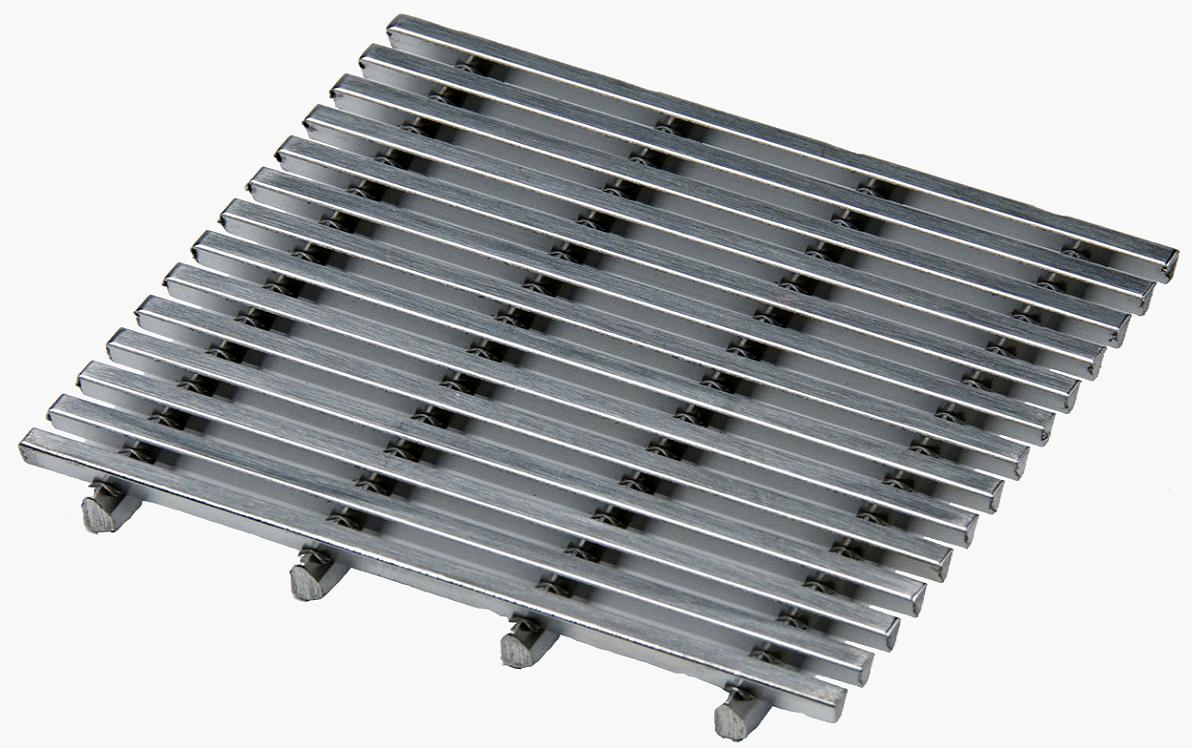
Profile (Wire) Deck

This screening media is used primarily for dewatering applications.  Additionally this decking is used in the Coal industry for drain & rinse and desliming applications.  This decking is also utilized in screeners for the iron ore, potash and phosphate industries.

Profile decking is most often stainless steel construction, but can also be constructed from other metals.  This decking most typically consists of V-shape or triangular wire profiles that are supported in parallel on cross bars.  Read More…


Share this blog post:
FacebooktwitterlinkedinmailFacebooktwitterlinkedinmail
Avatar

Why Recycle Glass? The Answer Is Clear

By Cleveland Vibrator Team

Remember the days of “Tube TVs” and “Low Radiation” computer screens?

I remember walking into Cleveland Vibrator and seeing, what I would describe as, the land of misfit computer screens that had been stored away through the many years that Cleveland Vibrator has been in business. One day they disappeared and the land of misfits was replaced by trade show accessories. Working here has opened my eyes to the many industries that don’t get the attention they well deserve, especially recycling. Recently, I was invited to visit a customer whose specialty was Glass Recycling of old TV screens and computer monitors. Ding, ding, ding, the lightbulb went off… this is where those “misfits” disappeared to. This got me thinking, what exactly can recycled glass be used for?

The glass used for these old monitors and displays is referred to as CRT, Cathode Ray Tube Glass, and it is estimated that the typical CRT device is made up of between 15 to 90 pounds of glass (depending on device) that protects the users from the radiation produced by the electron gun and beam gun inside that device. Since the emerging high demand of LCD, LED and Plasma Screens of the 2000s, it is an estimated 57 million computers and televisions are sold annually in the U.S. according to U.S. Environmental Protection Agency. Households are now discarding old models of outdated technology at a much higher rate than we have ever seen before. Read More…


Share this blog post:
FacebooktwitterlinkedinmailFacebooktwitterlinkedinmail
Mike Stratis

The Importance of Proper Installation of Industrial Vibrators

By Mike Stratis

“If you don’t have the time to do it right, when will you have the time to do it again?”

– John Wooden, former UCLA Men’s Basketball Coach and Presidential Medal of Freedom award winner.

We have a few frequently asked questions regarding bin vibrators, many of which revolve around how to install the unit. Here is the down and dirty:

Read More…
Share this blog post:
FacebooktwitterlinkedinmailFacebooktwitterlinkedinmail
Avatar

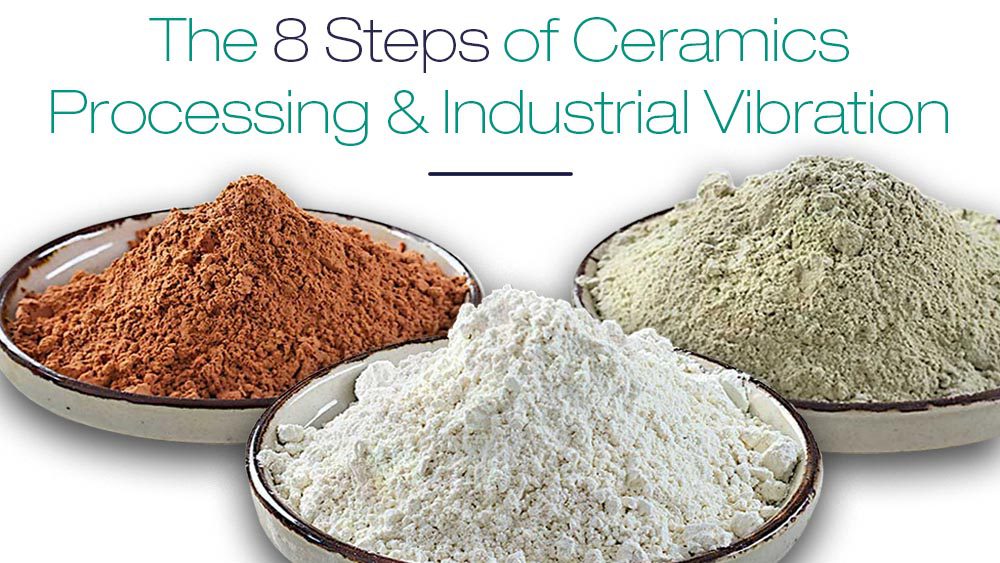
The 8 Steps of Ceramics Processing and Industrial Vibration

By CVC Team

“To acquire knowledge, one must study; but to acquire wisdom, one must observe.”Marilyn vos Savant

You know those ceramic dishes your mom uses to serve Sunday dinner? What if I told you that Industrial Vibration played a part in making those dishes possible?

The Ceramics Industry covers a wide range of products from traditional ceramics, such as pottery and chinaware, to technical ceramics for chemical, mechanical or thermal applications. I will provide you with a brief overview of the manufacturing process of traditional ceramics. I will help you see where Industrial Vibration fits into the processes as well, so brace yourself; here we go!

What exactly is Ceramics?

Ceramics can be defined as a class of inorganic, nonmetallic solids that are subjected to high temperatures for manufacturing use. I spoke about the term “traditional ceramics” which will be the focus of this post. These are ceramic products that are produced from unrefined clay, and combinations of refined clay and powdered or granulated non-plastic minerals. This includes pottery, stoneware, chinaware, porcelain, etc. To create these end products, the ceramic matter needs to go through the traditional manufacturing process, which goes as follows:

Read More…
Share this blog post:
FacebooktwitterlinkedinmailFacebooktwitterlinkedinmail
Avatar

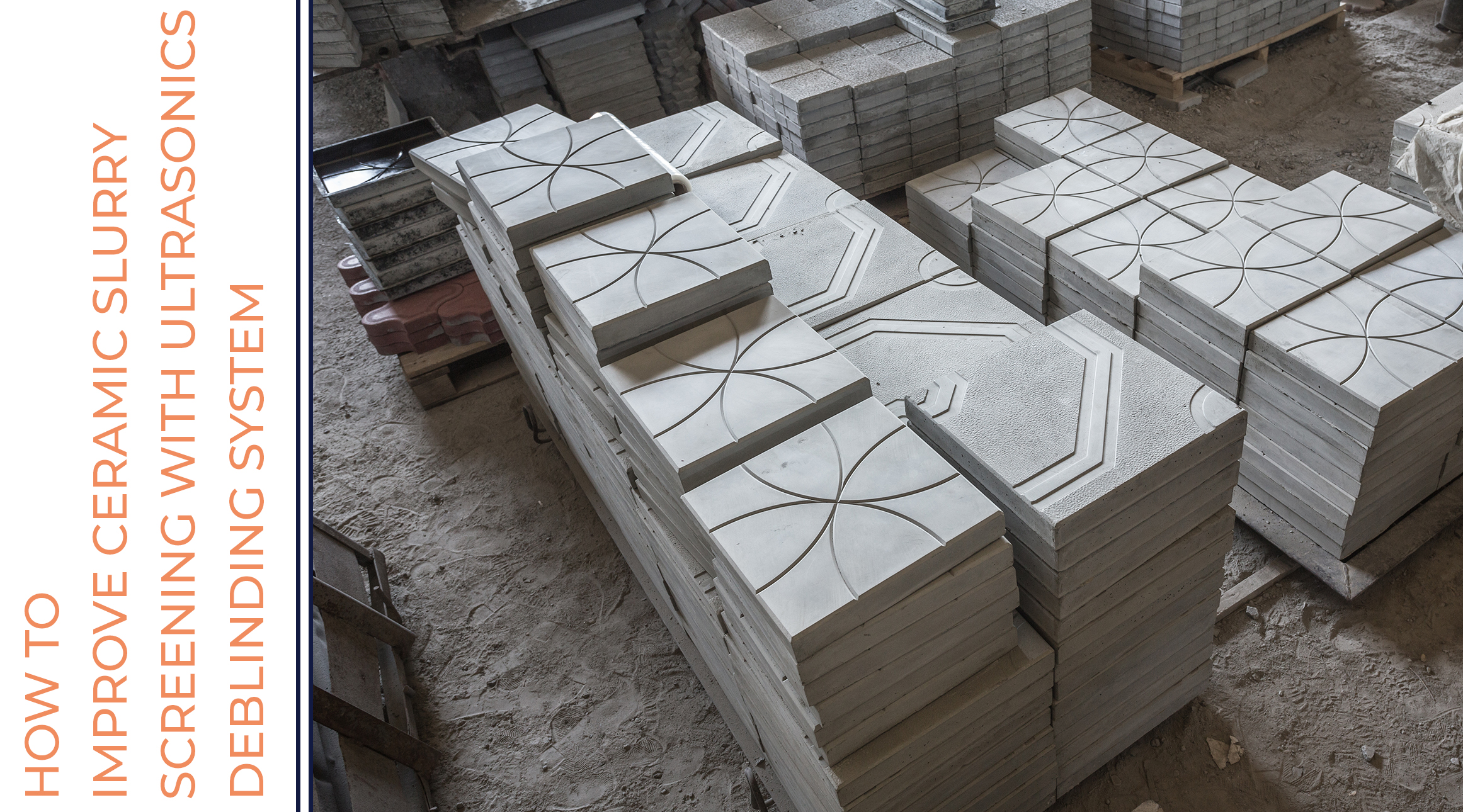
How To Improve Ceramic Slurry Screening With Ultrasonics Deblinding System

By Cleveland Vibrator Team

Liquid ceramic glaze or clay slurry materials are used in a variety of products and applications ranging from decorative and protective glazes to tile glaze or electrical porcelains. Typically this material starts with either Koalin clays or ceramic powders mixed with water or other liquids to form a slurry. Depending on the application this slurry will need to be screened to remove any agglomerates (powders that did not get dispersed during the mixing process). This is a very important step because, in many applications, this slurry or slip will eventually be applied to an exterior surface either as a decorative or possibly a protective coating. In either case, the coating needs to be free of any oversize agglomerates or debris allowing for an attractive smooth finish free of any pits or blemishes. The finer the screen or sieve used, the better or smoother the finish.

Depending on the application, screening can range from simply pouring the slip or slurry through a filter bag with a relatively coarse mesh to using vibratory screeners with finer mesh sizes – down to 120 mesh or maybe finer. This is where the difficulties begin. Read More…
Share this blog post:

FacebooktwitterlinkedinmailFacebooktwitterlinkedinmail
Jack Steinbuch

What You Need To Know About Screening Media – Part III

By Jack Steinbuch

This blog is the third in a series that has been dedicated to typical screening media that are installed in Vibratory Screeners with their advantages and disadvantages so you can be in a better position to assist us in the selection process.

Polyurethane

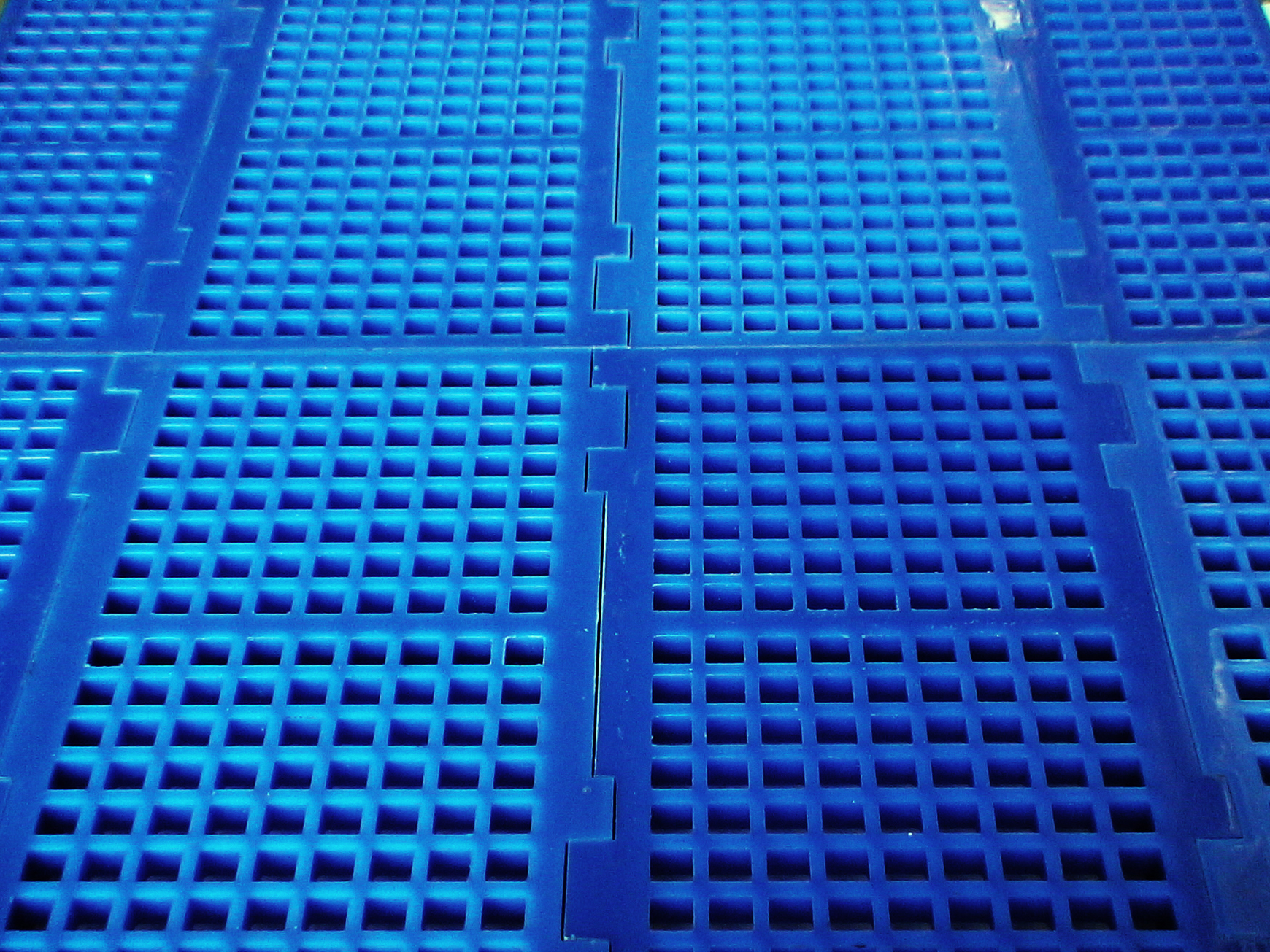
This screening media has been gaining acceptance in sizing and dewatering applications.  Polyurethane is a synthetic polymer that is either cast or injection molded into screen decks or panels/modules.   They are somewhat similar to perforated plate as specifications are typically designated by the openings, there is a bar width (amount of material between the openings), centers (distance between the holes as well as staggered or straight line) and thickness. Read More…
Share this blog post:

FacebooktwitterlinkedinmailFacebooktwitterlinkedinmail
Avatar

Vibrator Testing and Data Collection – The Story Continues…

By CVC Team

I’m not sure but I think it was the really old Batman and Robin series with Adam West where the show would end with the dynamic duo in sort of real trouble.  Some place along the line they’d pick up the story with a line something like “when last we checked in with…” well that sort of applies to my efforts to collect new data on Cleveland Vibrator’s line of pneumatic piston vibrators, both impact and air cushioned. Well…when last we check in… Cleveland Vibrator was making efforts to better document the performance of the piston vibrator line and we’d just recently purchased a CoCo-80 Dynamic Signal Analyzer as part of that effort.  I’d Blogged about my efforts and initial results a while back.

The initial plan was to capture the acceleration of a heavy plate to which we bolt an impact vibrator or air cushioned piston vibrator and isolate the plate with very soft airmounts.  Then using the equation F=ma, we’d calculate the force output of the vibrator, it all seemed reasonable.  At the time I wrote about data collected on the VM-25, miniature piston vibratorRead More…
Share this blog post:

FacebooktwitterlinkedinmailFacebooktwitterlinkedinmail
Mike Stratis

When Two Vibrators are Better than One

By Mike Stratis

Hello, world! First-time blogger here, so go easy on me. If you are reading this, I’d like to say thank you. Hopefully, the next few minutes help you choose and install the optimal number of industrial vibrators for your application, and give you plenty of #vibrationeducation!

In my 7+ years with The Cleveland Vibrator Company, I’ve been lucky enough to learn from some of the most experienced in the industry. Glen Roberts has learned and thus forgotten, more than I’ll ever know about pneumatic industrial vibrators. Jack Steinbuch can size vibratory equipment in his sleep. David Strong can design anything these two toss on his desk (or in his inbox). They have more than twice my age in combined years at The Cleveland Vibrator Company between the three of them.

That’s a lot of vibrators!

Read More…
Share this blog post:
FacebooktwitterlinkedinmailFacebooktwitterlinkedinmail
Avatar

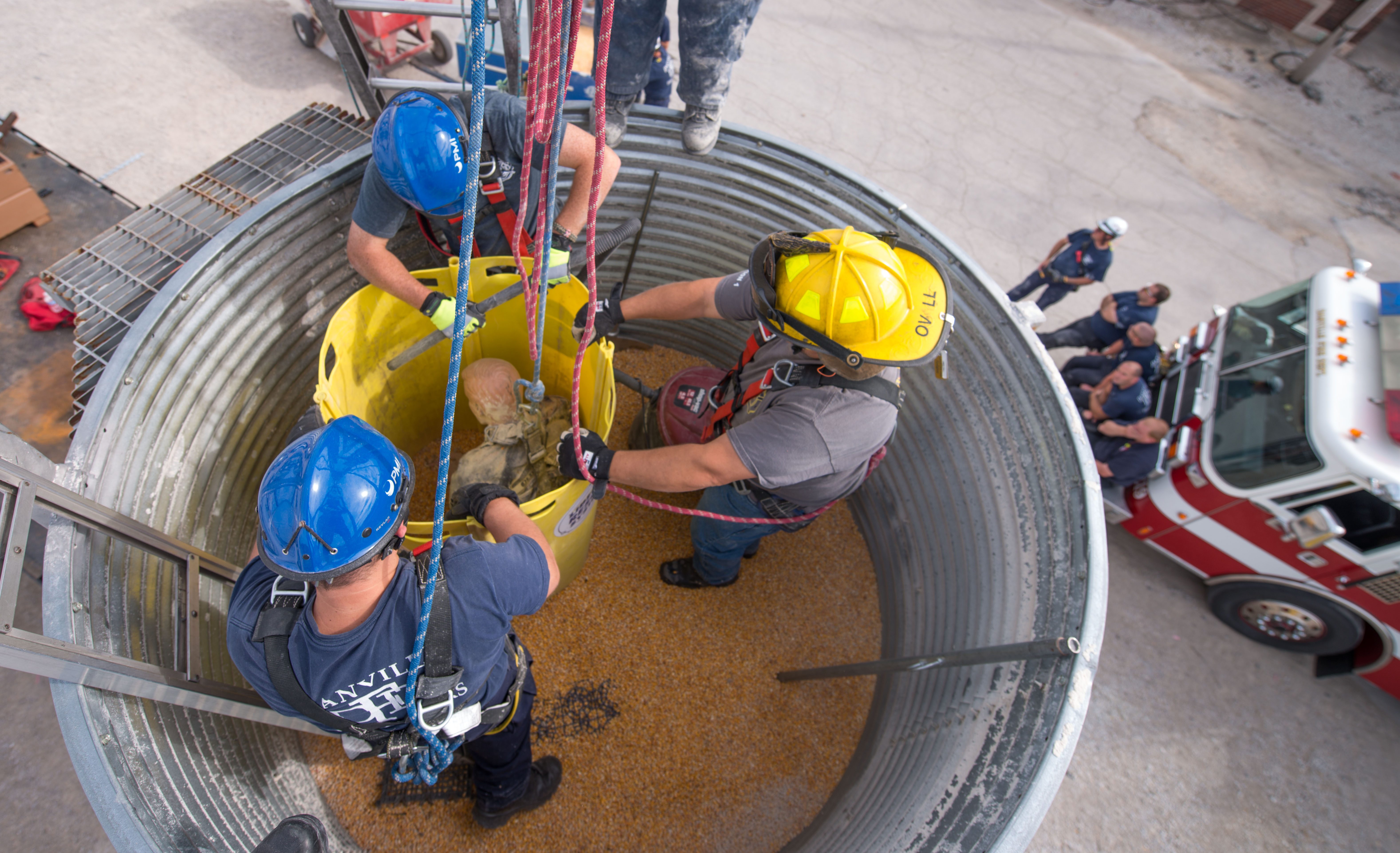
Grain Bin Safety Week: How Rescue Tubes and Proper Training Will Save Lives

By CVC Team

Did you know that the pressure of engulfing grain is so powerful, that it takes more than 1,500 pounds of force to free a body submerged under less than two feet of grain?

I must admit that although Cleveland Vibrator has supplied Industrial Vibrators and Equipment to the grain and feed industry for many decades, I was not aware until I took the Asmark Safety Course how many folks are trapped, injured or killed inside grain silos and feed mills. A lot of the grain safety training applies to just about all industries and mirrors the manufacturing industry, which I have  worked in and been associated for over 45 years. Two major things I picked up from this training were:

  1. Tag out and lock out is huge anytime you need to work on a piece of equipment, or when you are in an area that normally has running equipment.
  2. Checking your tools to make sure they are in good working order which includes inspection of the guards and making sure you have no frayed electrical cords. Generally, this is just good work ethics  in any work environment. Read More…


Share this blog post:

FacebooktwitterlinkedinmailFacebooktwitterlinkedinmail
Avatar

Quit Throwing Away Money! Check Screening Powder Coating Solutions That Saves You Cash.

By Cleveland Vibrator Team

Powder coaters know the importance of utilizing a powder coating that is free from any contaminants or oversize particles. This would include the end-user and the powder coating manufacturer. Typical powder coating applications can leave up to 20% of the original powder either to be recycled or swept up and thrown out in the trash. Depending on the application this can be like throwing money out with the garbage.

Over the years we have built numerous vibratory check screeners for the powder coating end user who is interested in reclaiming the excess powder left over from a product run. Typically powder coatings are sieved in the 80-120 mesh range by the manufacturer. This mesh range is dependent on the type of powder and application where the powder is applied.  When a customer approaches me with an application involving powder coating reclaim, I first inquire about his application. Is the finish a high-quality finish or coating possibly for a protective value? Secondly, is this a continuous or batch operation? This helps in determining the proper mesh size. High-quality finishes require a finer mesh size while other finishes may require a coarser screen. Both will remove the contaminants inquiries range from reclaiming powder swept up from the bottom of paint booths, while also protecting applicator spray guns from blockage. Read More…
Share this blog post:

FacebooktwitterlinkedinmailFacebooktwitterlinkedinmail
1 8 9 10 11 12 18  Scroll to top